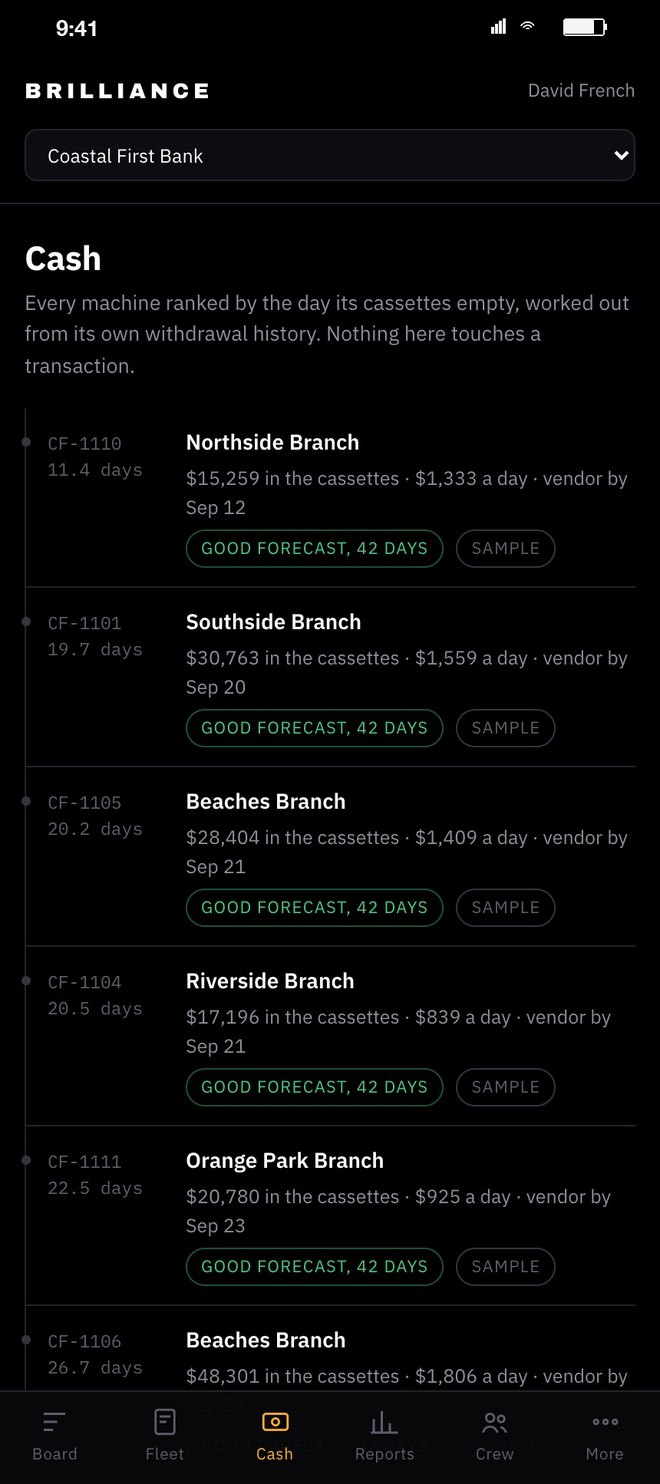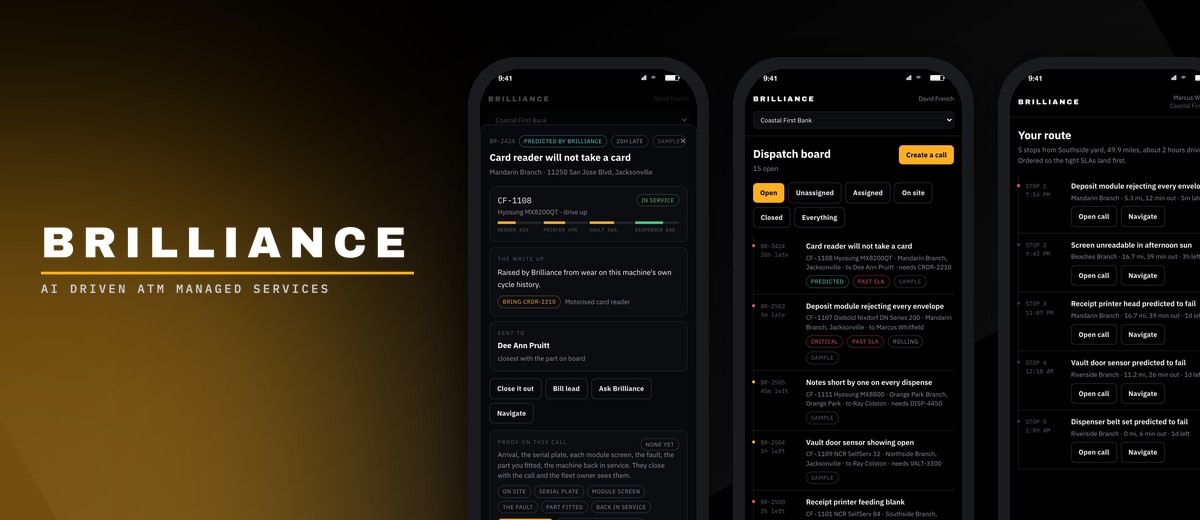
An ATM technician with years in the field wanted the whole trade in one system: banks and fleet owners onboard their own machines, wear on every part raises the call before the fault, dispatch names the part and sends the call to the closest technician who has it in the van, the route lands the tight SLAs first, and the cash screen says which cassette runs dry on which day. Paid at 11:37am on a Saturday. Live at 2:29pm.


It installs from the browser on any phone, no app store. Seats are by invitation: a fleet administrator adds a person, and that person signs in with a code emailed to them. No passwords. One bank's terminals are never visible to another bank's technicians.
Open BRILLIANCE →The application came from a working ATM technician and ran to pages: predictive monitoring, an AI diagnostics layer, a dispatch engine, route optimization, voice close outs, a reporting dashboard, and a note that the whole thing should transfer to other industries later. The gameplan call was the following Tuesday. Then the offer opened with two straight answers. We are not building the transaction switch: the machines already run on a processor, so the app reads from it and never sits in the money path, and there is no PCI audit to pay for. And the internals on the big three manufacturers are locked, so live telemetry off the machine is not something anyone can promise. If a bank opens that data up, the system points at it and the monitoring switches on with nothing rebuilt.
Everything else went in the offer. The owner added AI driven and transferable, then a domain, a splash screen and a black and white theme, then predictive cash management. Paid at 11:37am on a Saturday. Live at 2:29pm.
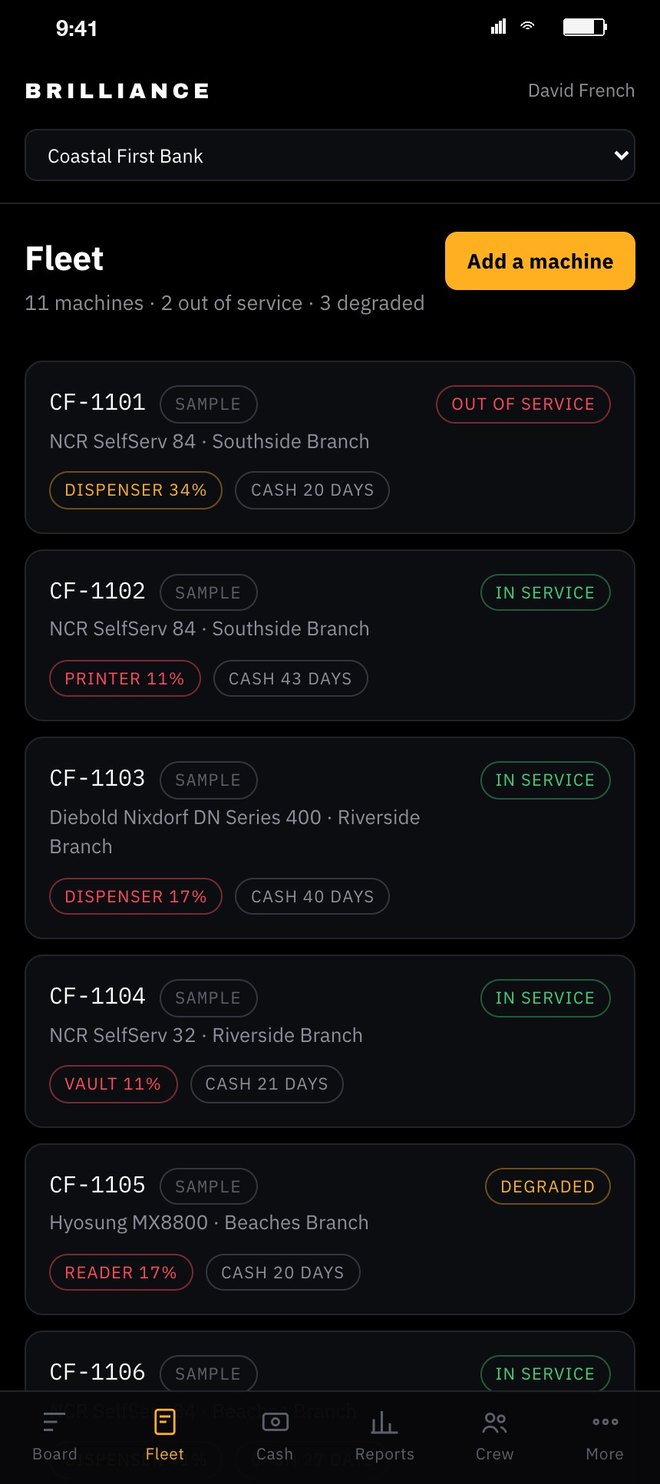
Banks and fleet owners add their own sites and machines and manage them on their own seat. Every tenant is walled off. Reports measured off the calls themselves: uptime, inside SLA, mean time to repair, caught before failing.
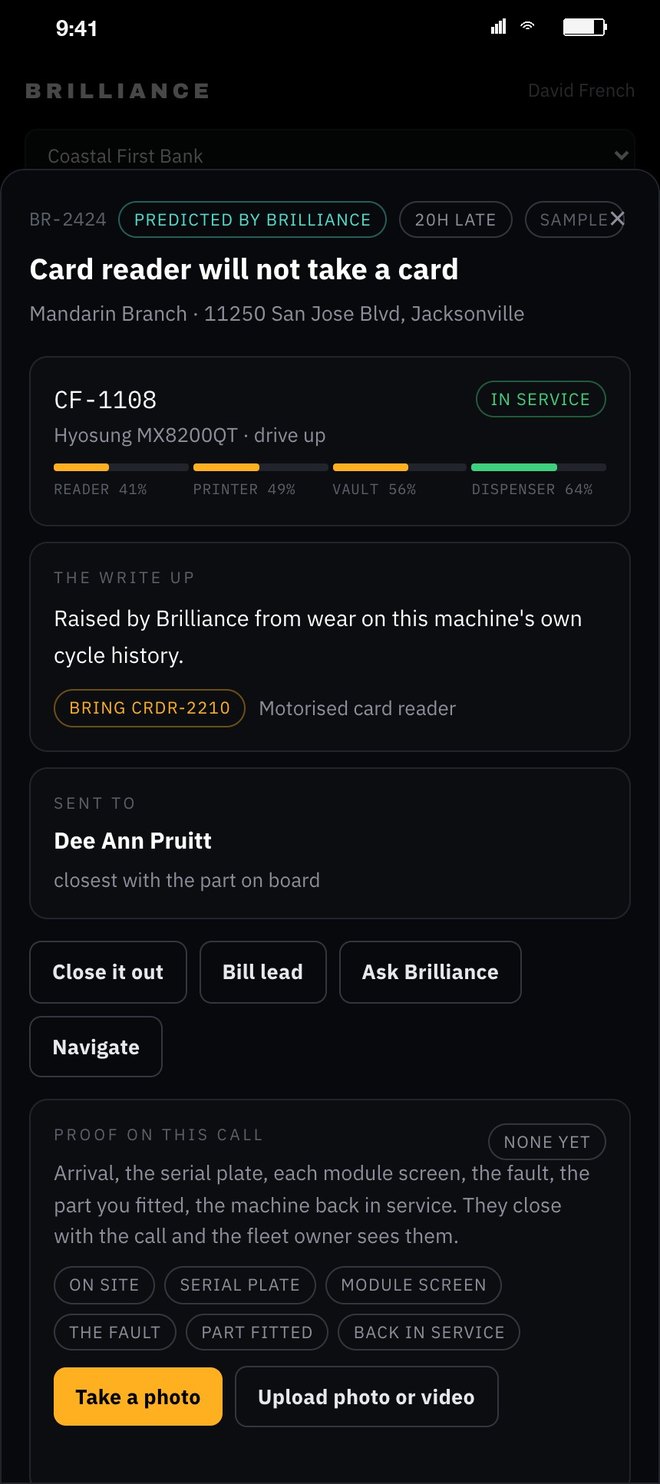
Every part on every machine carries a cycle count against its rated life. When one is close to done the app raises the call itself, writes it up, and names the part number to bring. No sensor, no manufacturer data.
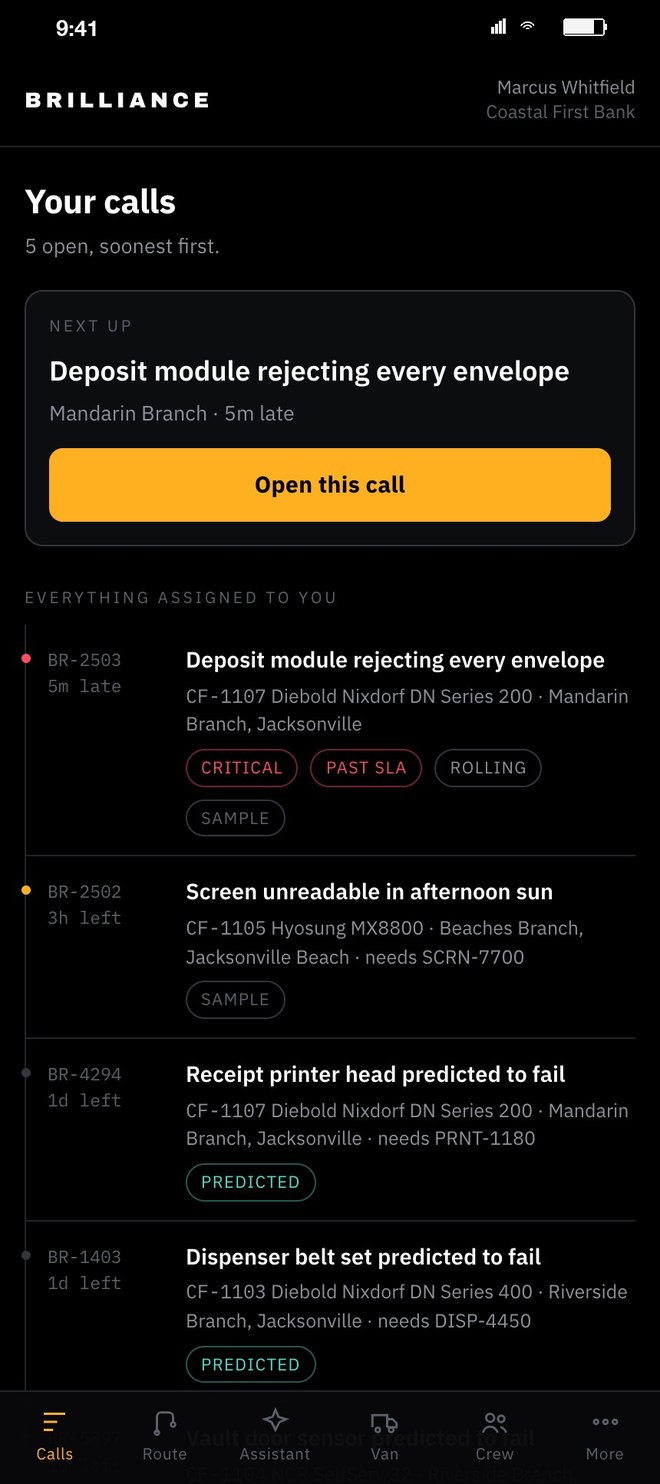
Each technician's van stock is in the app. A call goes to the closest technician who is carrying that part, by hand or by the engine overnight, and lands as a text with the reference, machine, location, part and SLA clock.
Cash pickups scheduled off each machine's own withdrawal history. Photo proof on every call, from arrival to back in service. A Crew tab so a tech at a machine can reach whoever was on it last week. Voice close outs and an assistant on the owner's own AI account.
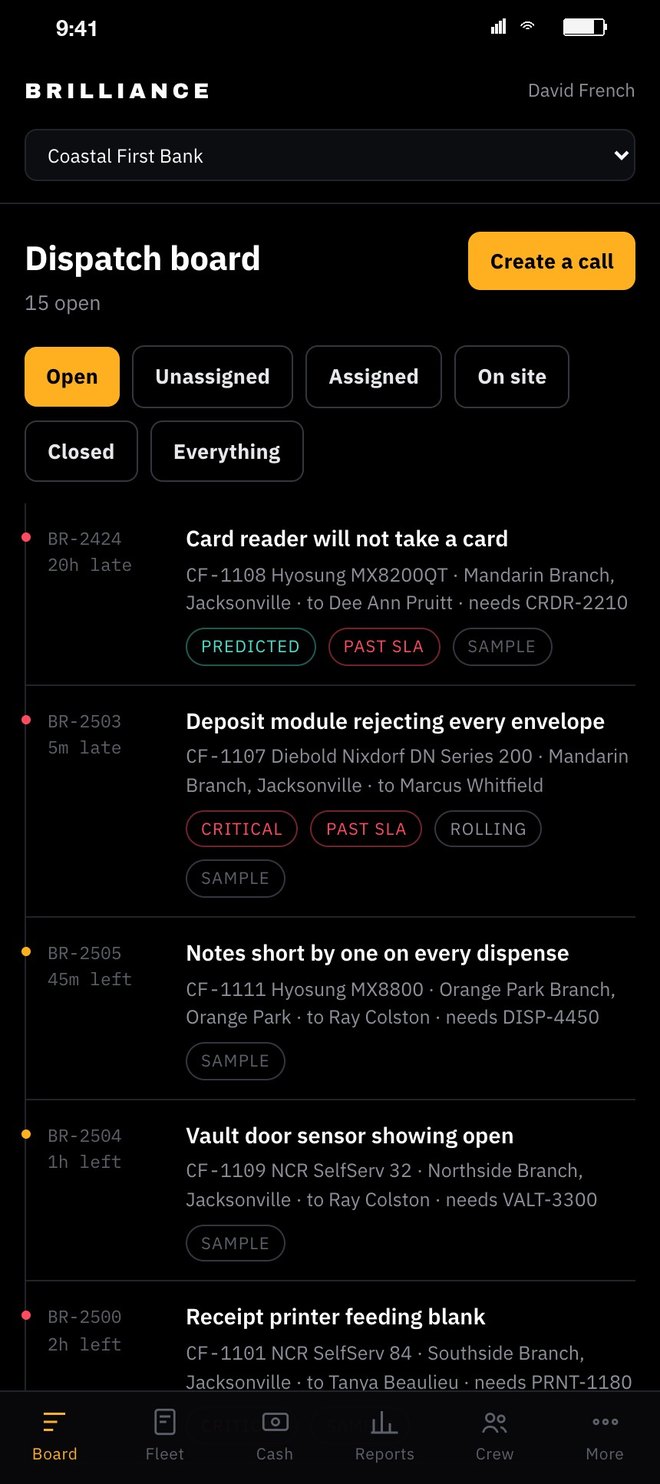
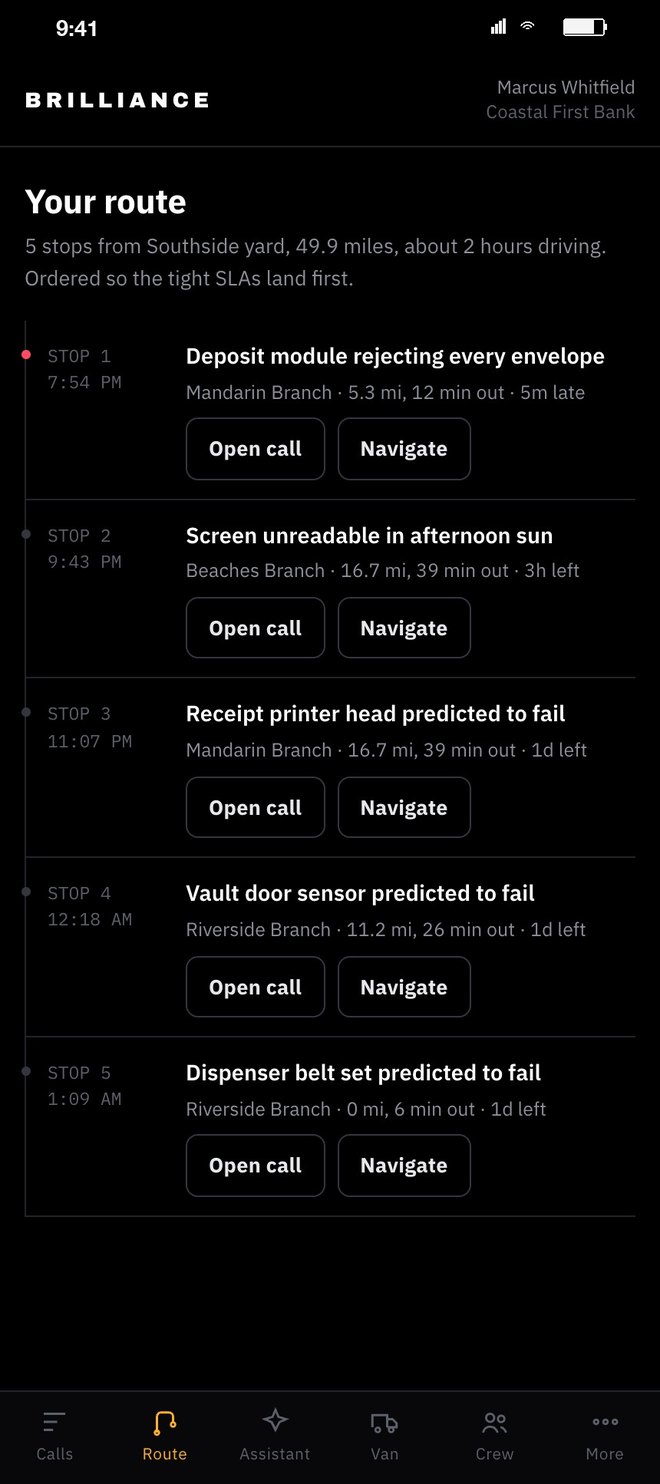
The write up names the part. The van screen says what each technician is carrying. So the engine does not pick the nearest person, it picks the nearest person with that part on board, and says so on the call: "closest with the part on board". A dispatch engine that always finds the part in every van is a dispatch engine nobody can see working, so the sample fleet's vans are stocked unevenly on purpose. The technician opens the app to one card, Next up, one button, and a route ordered so the tight SLAs land first, not the nearest stop.