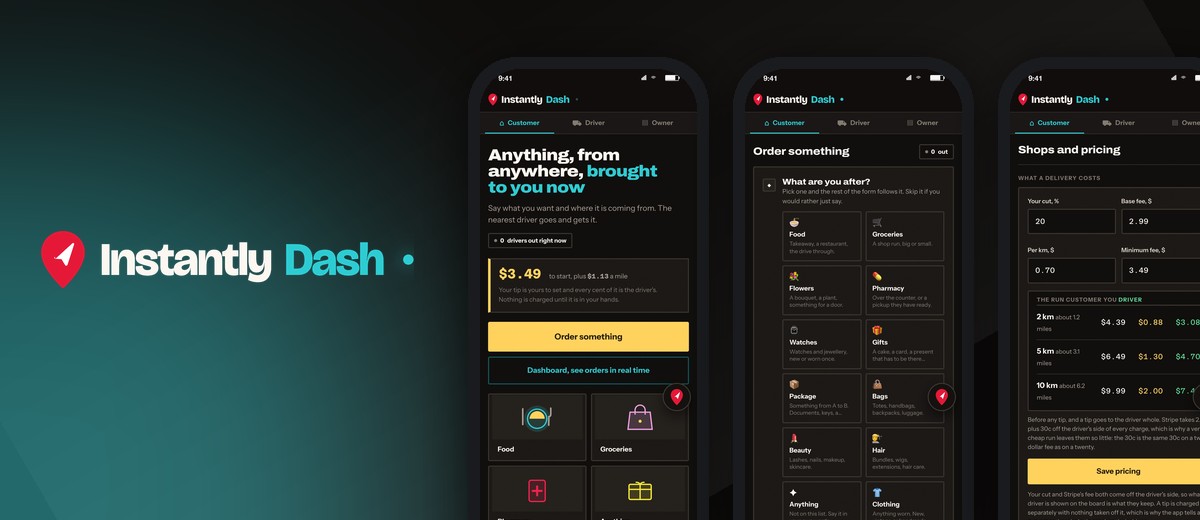
A delivery app for one company, not a marketplace with a thousand rules. Say what you want and where it is coming from, the nearest driver goes and gets it, and the driver is paid into their own Stripe account the moment it is handed over. Sterling sets every price from his phone.

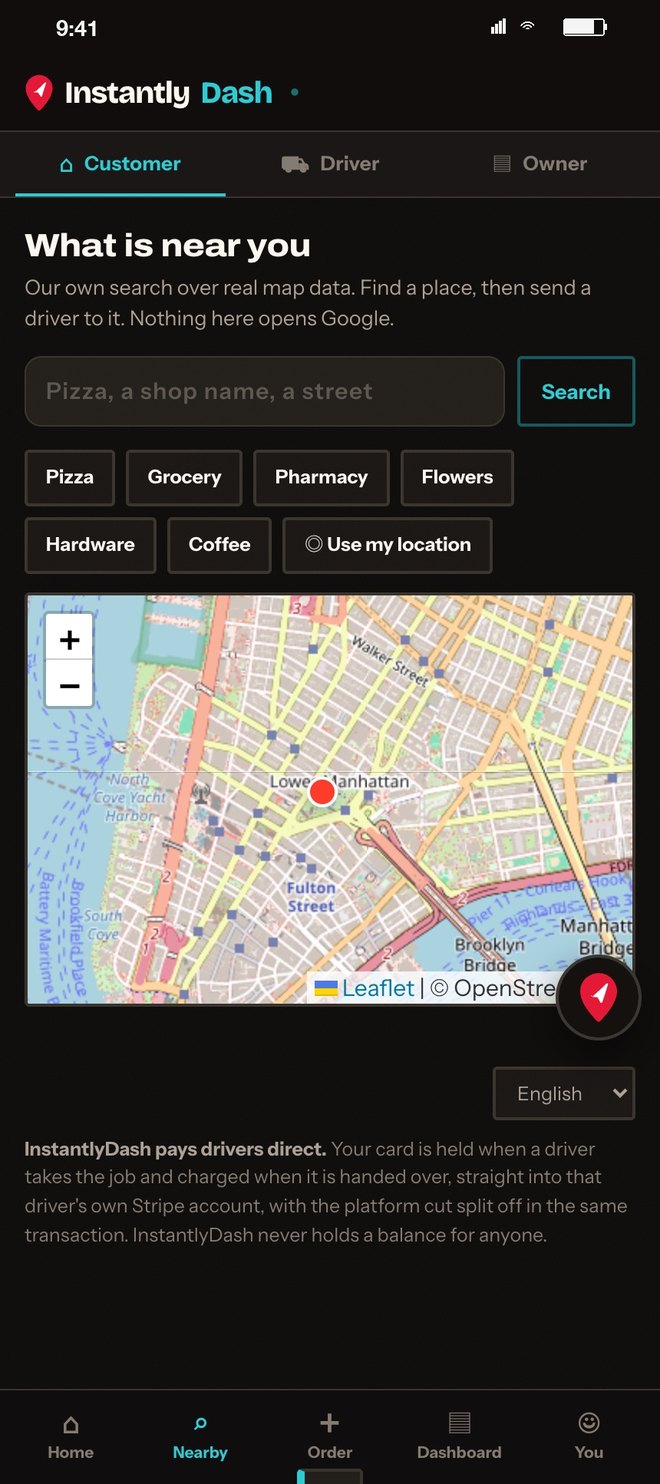
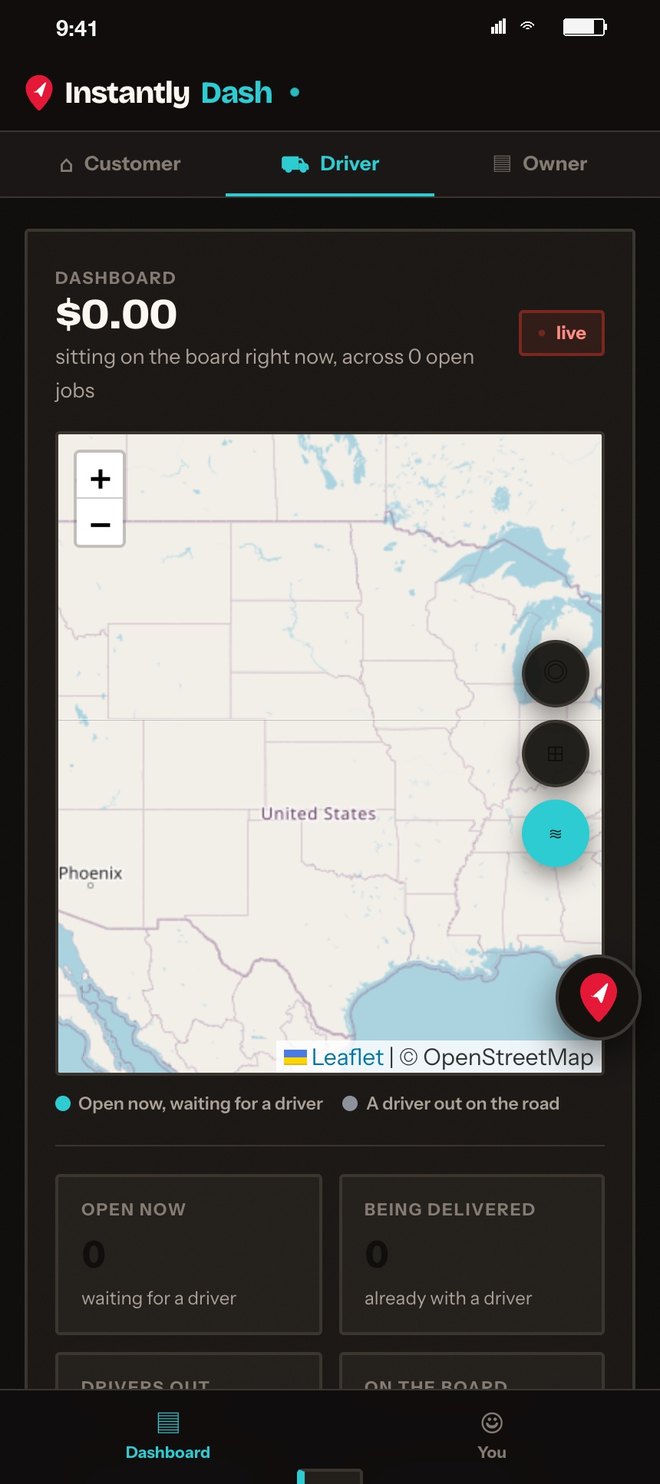
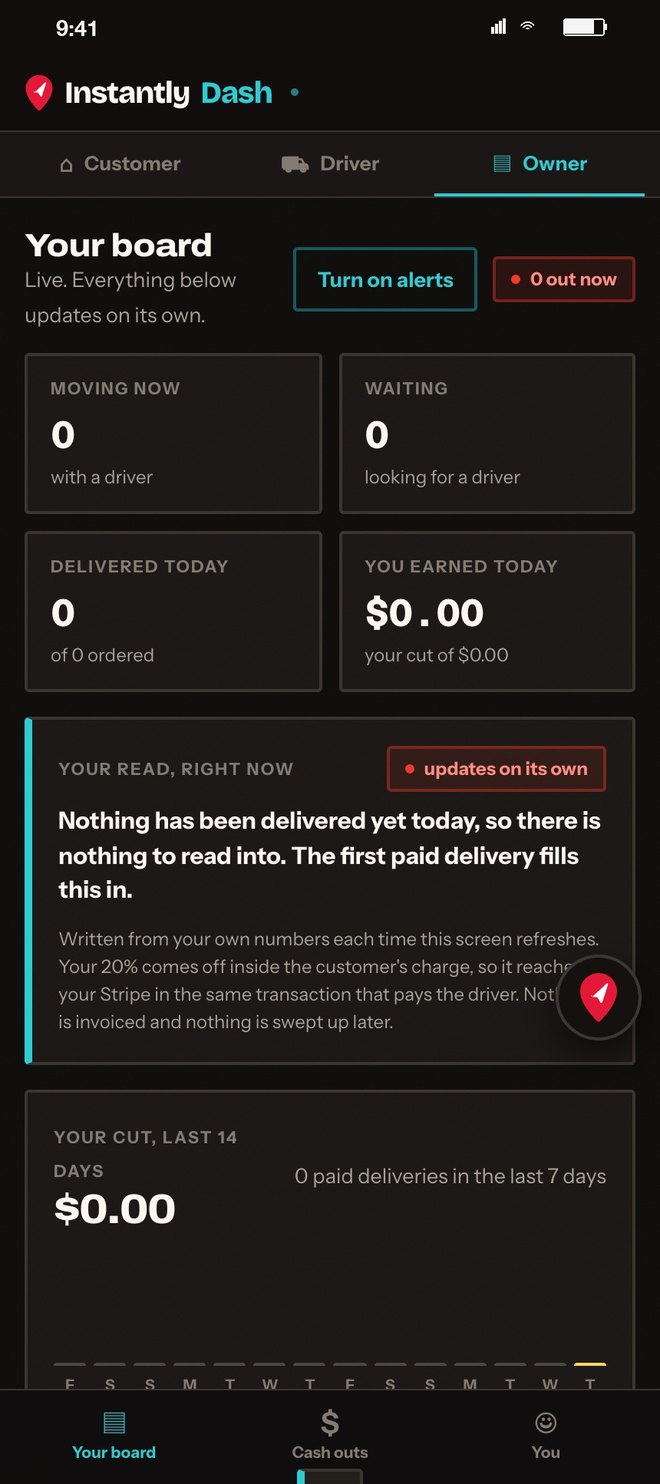
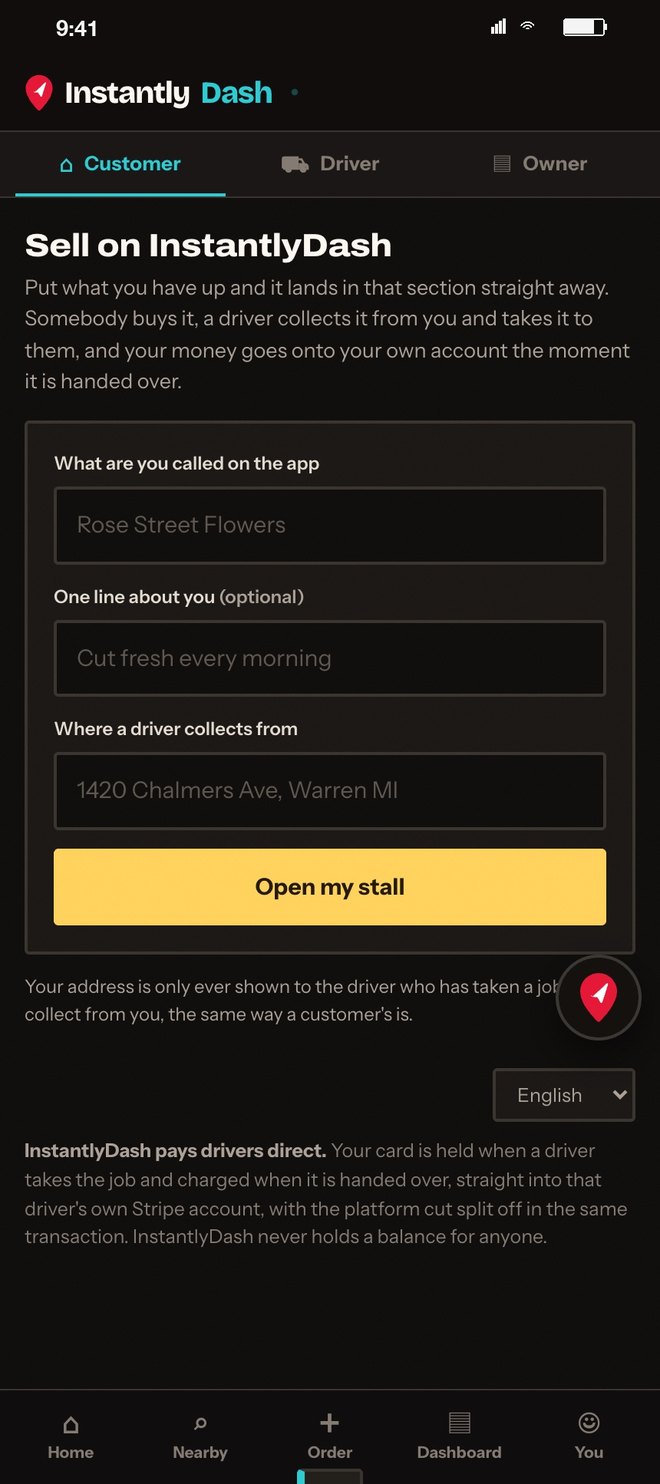
Real screens from the live app. Swipe.
InstantlyDash is live on the web today, one tap away inside Tally and on its own. Open it and price a run.
Open InstantlyDash →Sterling came to us in July 2026 for Tally, his live streaming app. The delivery app was in the same application, described as the other half of the platform: a company, Instantly Inc, that streams and delivers, with one logo, one sign in and one console behind both.
The rule from Tally carried straight over. Nobody's money ever sits with the platform. A customer's card is held when a driver takes the job and charged when it is handed over, straight into that driver's own Stripe account, with Sterling's cut split off in the same transaction. No wallet, no balance, no license.
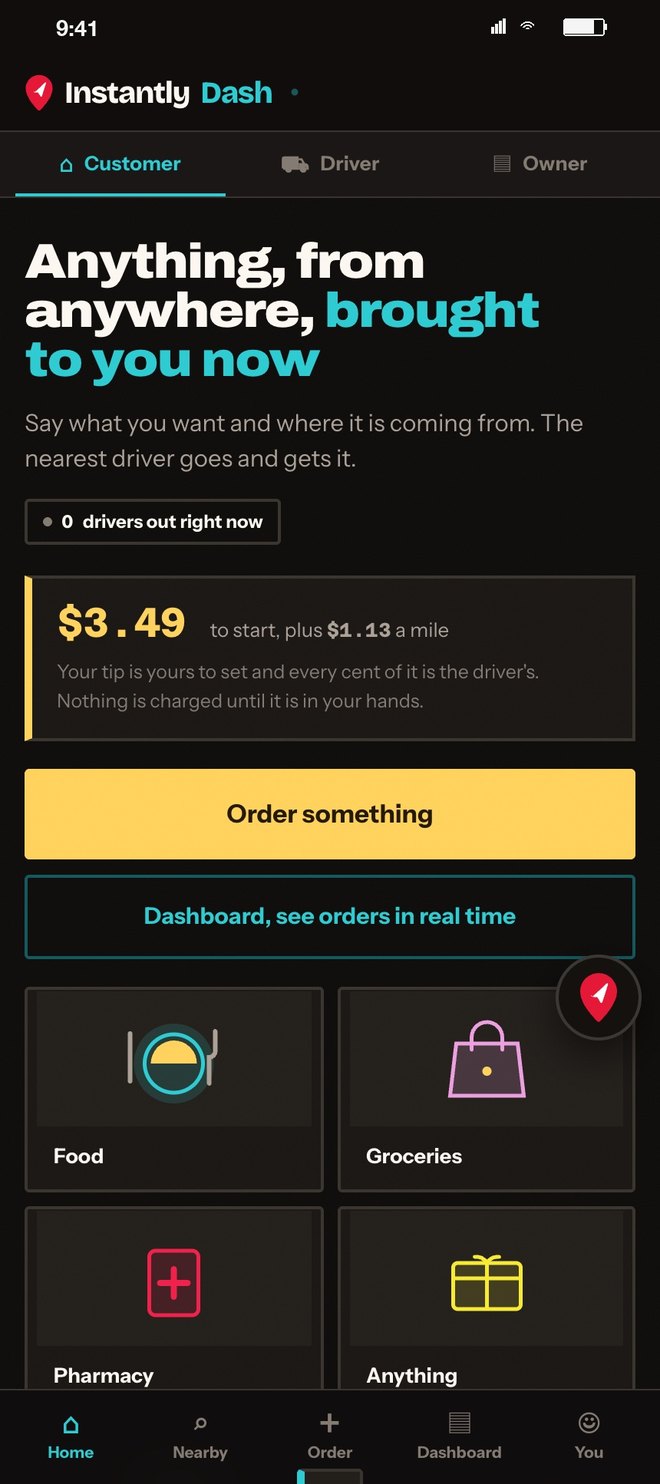
Then the hard part: he is starting with no drivers and no orders, and the app still has to look like a company on day one. His words on 12 August: "keep zero drivers out right now showing" and "it's just a lot of words". He was right on every count. The front page was rebuilt that evening.
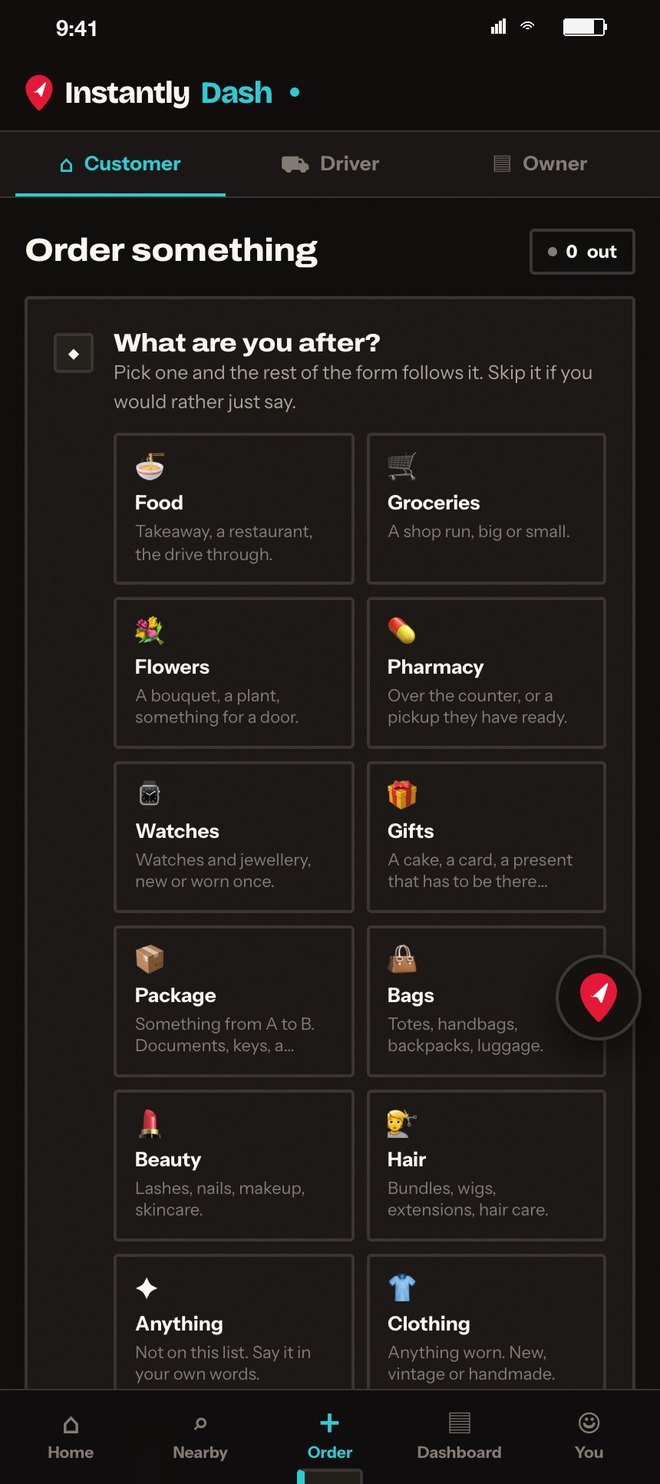
Price on the front page, categories with pictures, a real map search for what is near you, live chat with your driver, tips in real time even after the delivery, and a gift beside the tip.
A live map with their own icon on it, orders arriving in real time, a photo at the door, and money that lands in their Stripe the moment they hand it over.
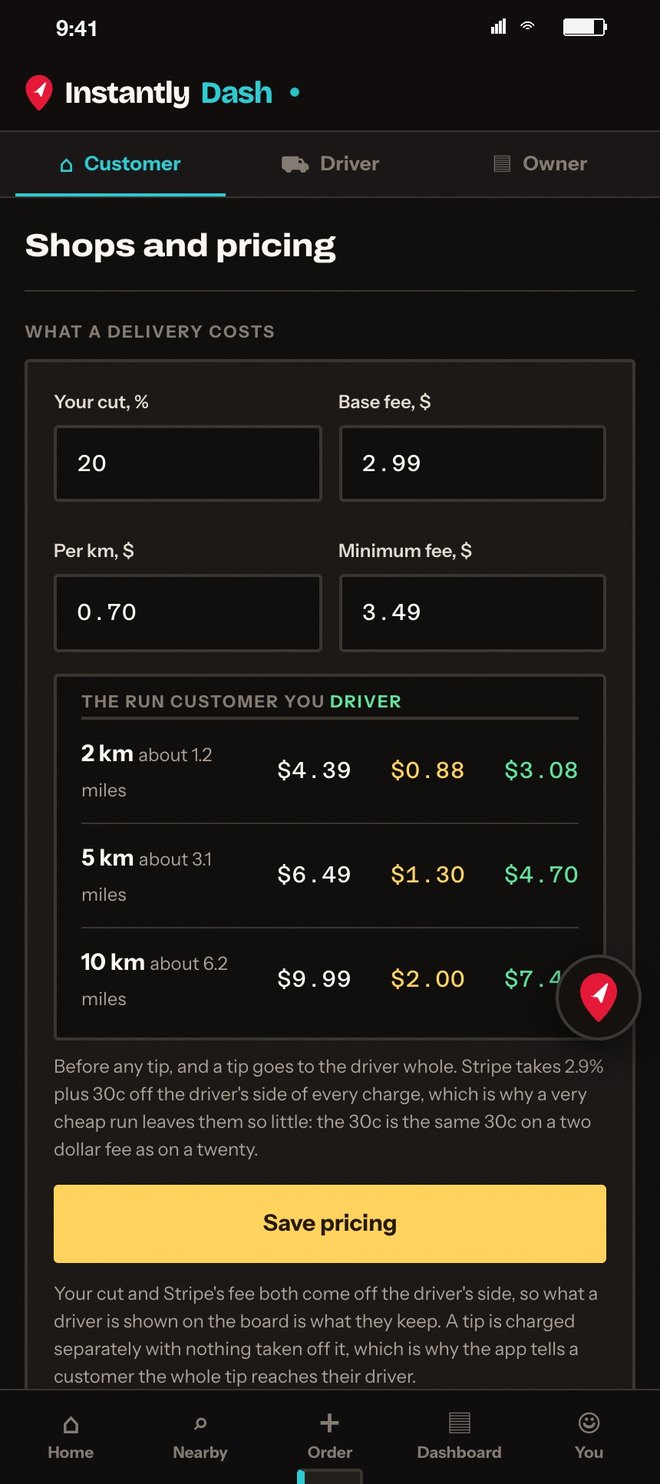
Shops and pricing, the board of every driver and order, cash outs. Sterling changes his cut or his per-km price and the app reprices itself.
One sign in, the language picker, live weather with warnings, the alert banners and the draggable Tally circle. Two apps that feel like one company because they are.
Four numbers: his cut, the base fee, the price per km and the minimum. Under them, a table that shows exactly what a 2, 5 and 10 km run costs the customer, what the platform keeps and what reaches the driver, recalculated as he types. Save, and every price in the app changes.
His cut and Stripe's fee come off the driver's side, so what a driver sees on the board is what they keep. A tip is charged separately with nothing taken off it, which is why the app tells the customer the whole tip reaches the driver.