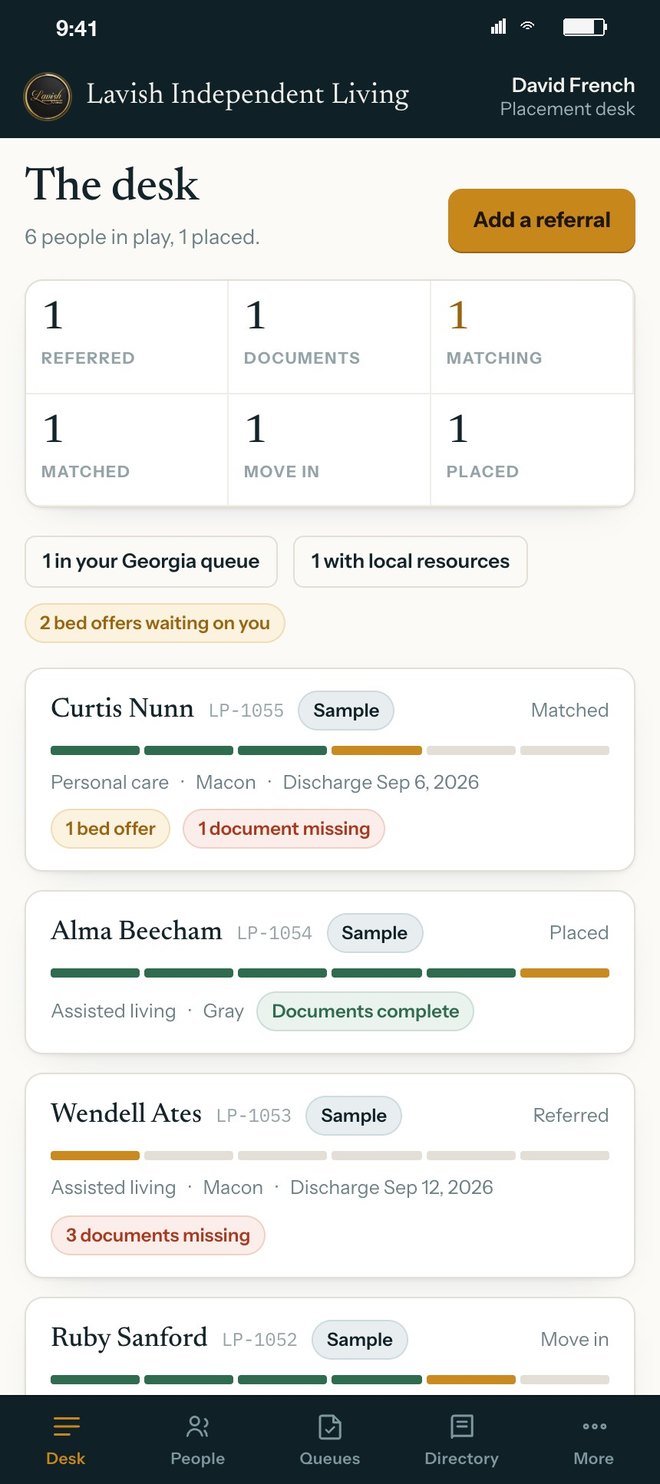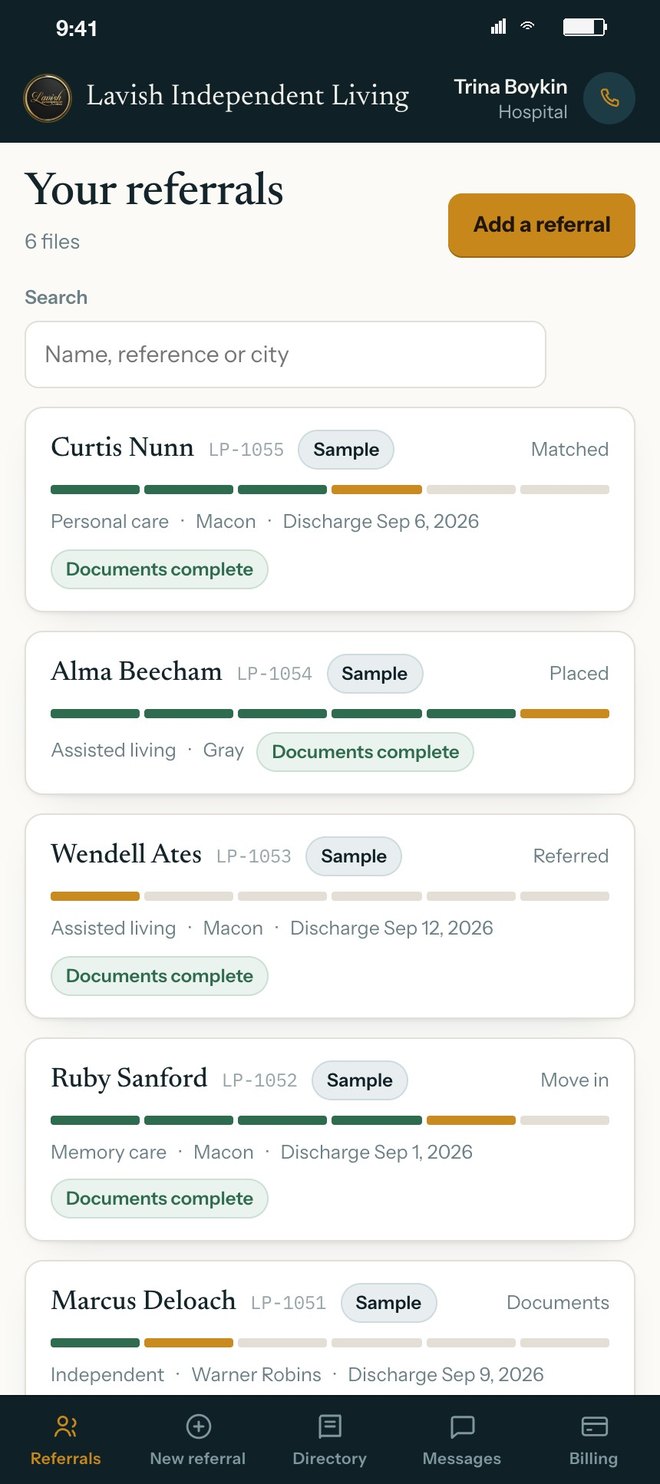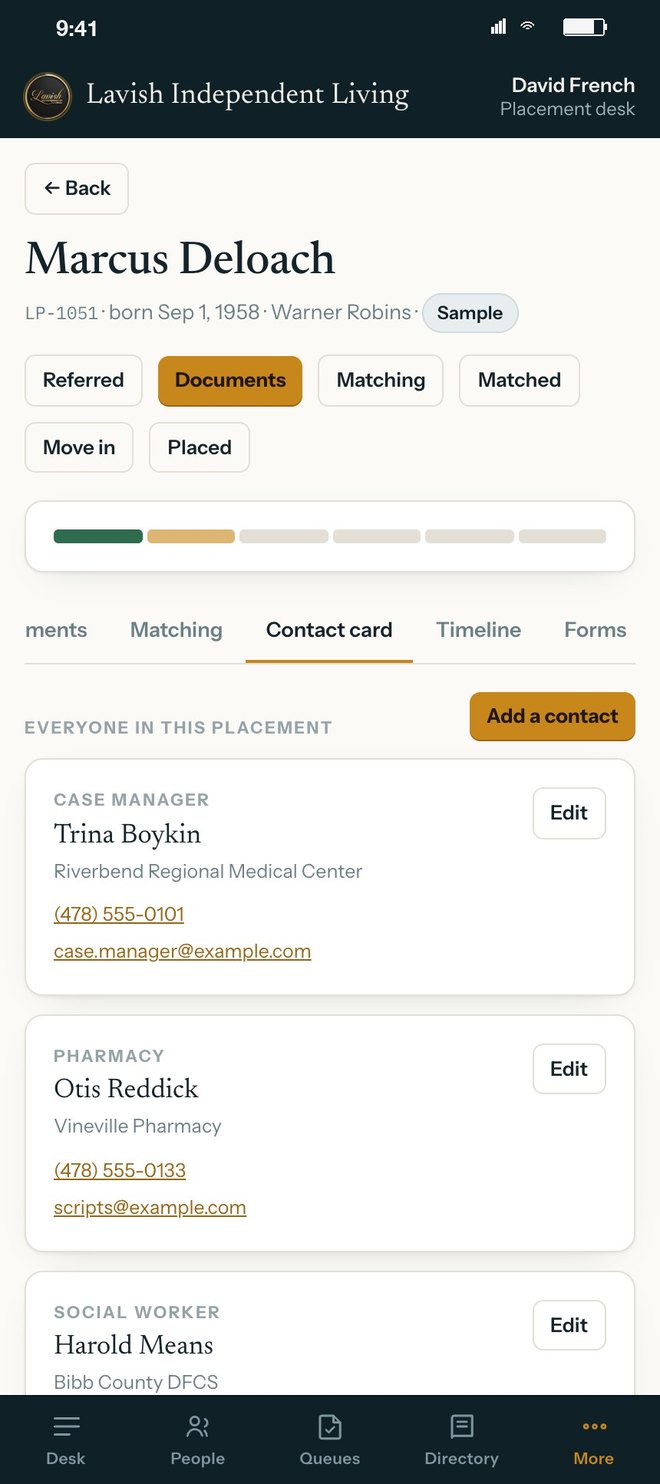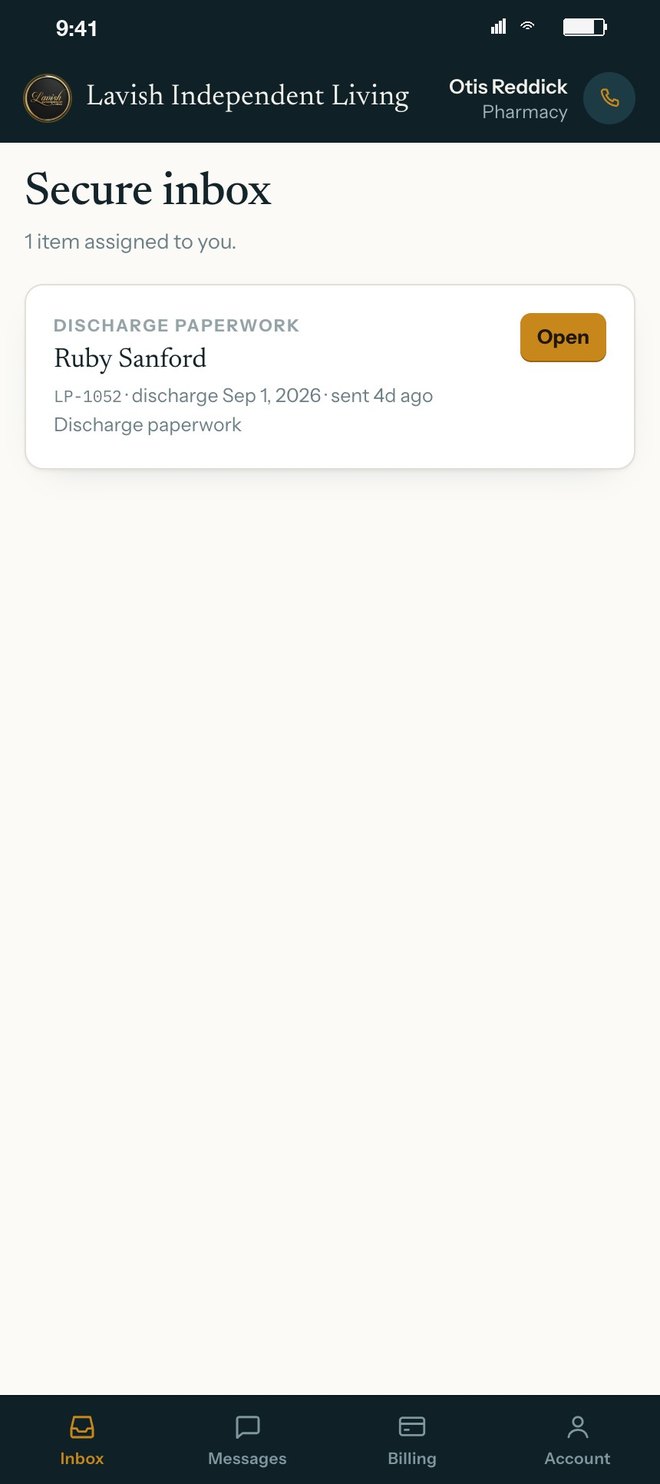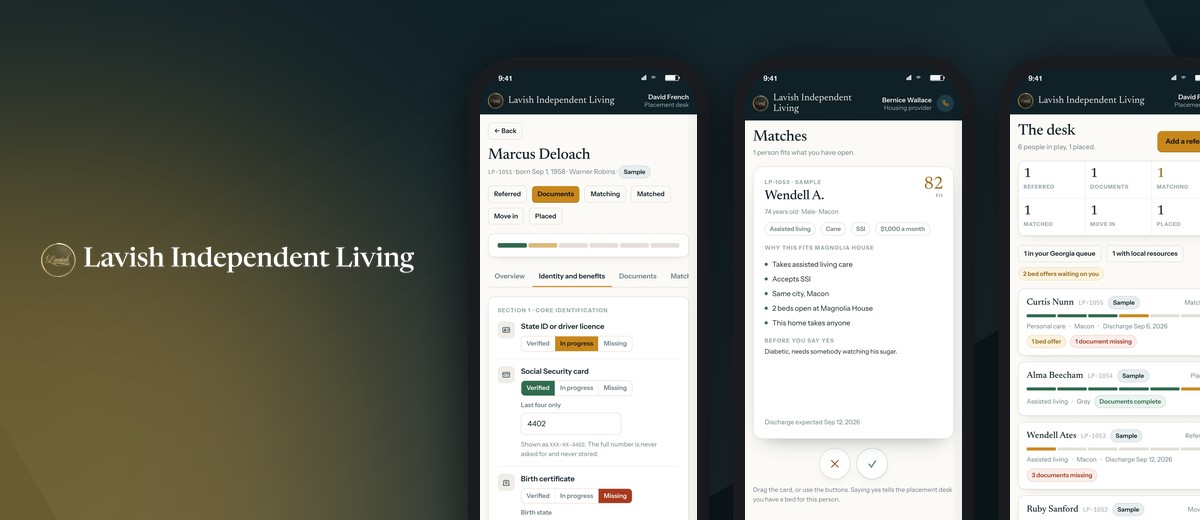
A Georgia housing placement business moves people from a hospital bed to a home. Case managers, home providers, pharmacies and loved ones all went through the owner, by call and by text. Now each of them signs in to their own part of one app: the hospital opens the file, the checklist says what is missing, the homes see who fits their open beds and say yes or no, and the owner watches the whole board.


It runs in the browser and installs from it on any phone, no app store. Every sign in is per person, by an emailed six digit code, and a person only ever sees their own part. Data is encrypted in transit and at rest, Social Security and card numbers show masked, and an audit log records who opened which document and when, in a record that cannot be edited afterwards. The sign in screen is the owner's, with the business number on it.
Open Lavish Independent Living →The application said one word: Placement. The gameplan call the next morning filled it in. Individuals coming out of a hospital who need a home, providers with a bed open, and the owner in the middle of every introduction, every document and every question, on one phone. Two weeks later the spec arrived, written out by hand first: five kinds of user, a document checklist section by section, a representative payee block, license approval for homes, and a rule about birth certificates that only somebody who does this work would know to write down.
The offer page was rewritten to that spec the same night, at 10:57pm. On the Sunday the owner asked for one more thing, a contact database for everyone involved in each placement. It was on the offer page fourteen minutes later, and the $100 landed seven minutes after that.
Hospital case managers, home providers, pharmacies, loved ones and the owner's own admin seat. Each one sees its own part and nothing else. A loved one follows one person's file and gets an alert when something changes, with no personal detail in the message itself.
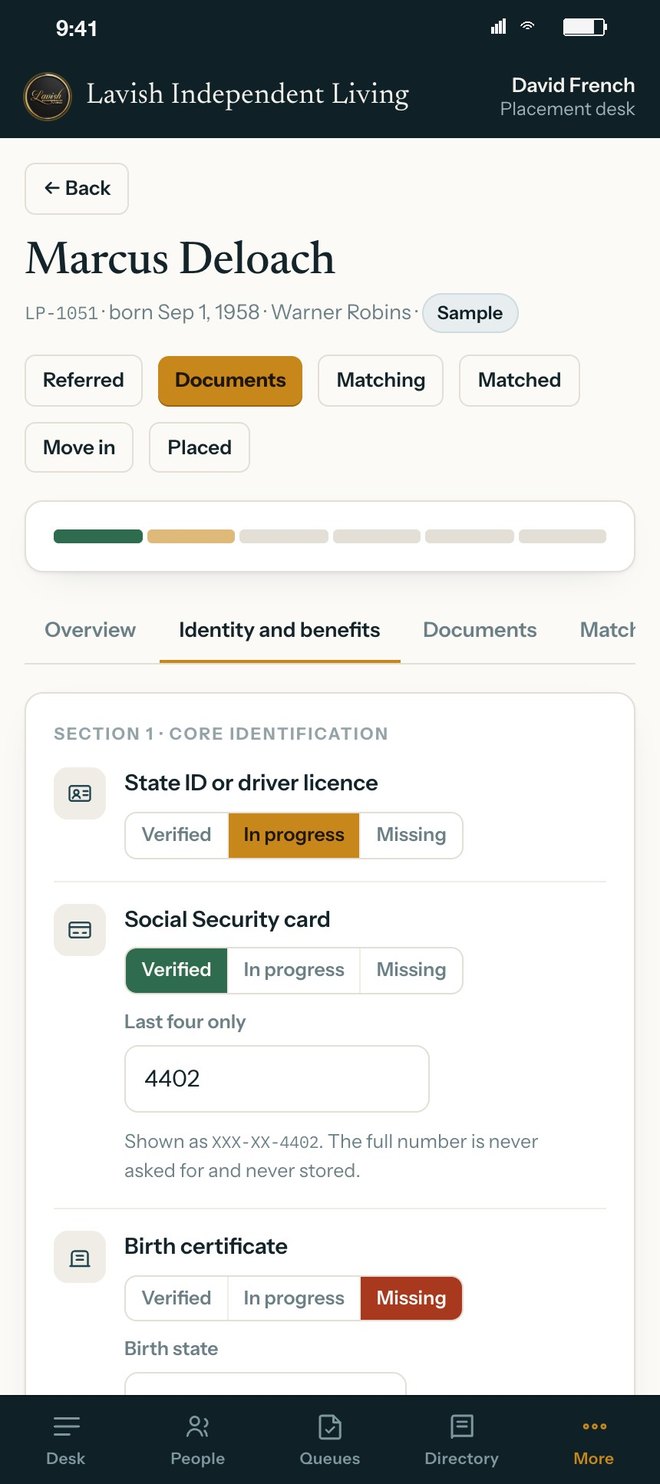
State ID, Social Security card, birth certificate with birth state, benefits status, debit and Direct Express cards, each Verified, In progress or Missing with the file attached right there. The representative payee section stays hidden until the answer is yes.
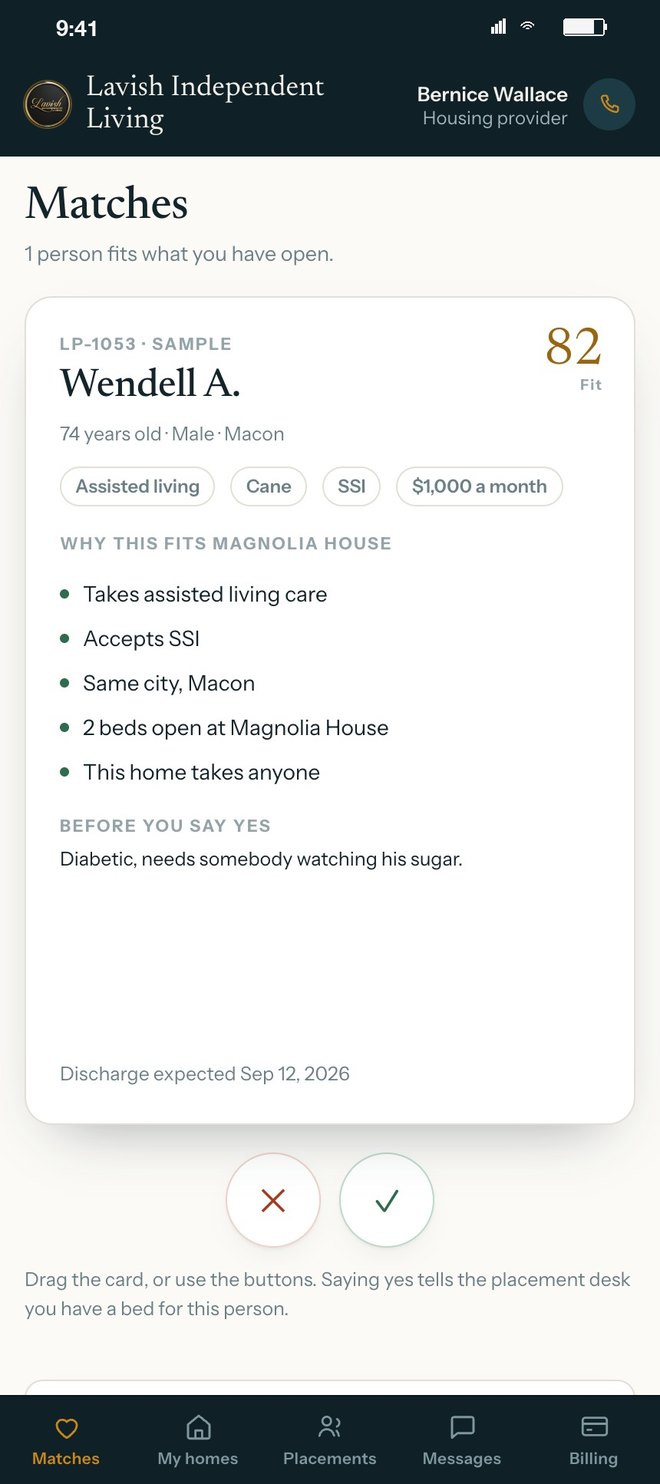
A home uploads its license and stays out of matching until the owner approves it. Then it sees the people who fit what it has open, why they fit, and says yes or no. The owner is out of the middle of every introduction.
Hospitals, pharmacies and homes subscribe at the owner's own prices, sized by beds for homes. No access to the queues until the subscription is live, paused when a payment fails, back on the moment it clears.
That rule was in the spec, and it is the kind of thing a generic case management tool will never have. When the checklist marks a birth certificate Missing, the birth state decides where the work goes: Georgia drops the case into the owner's own vital records queue with one button, anywhere else routes it to the local resources queue with the partner named, and the alert goes out either way. The desk shows both queues as a count, so nothing waits in a text thread.