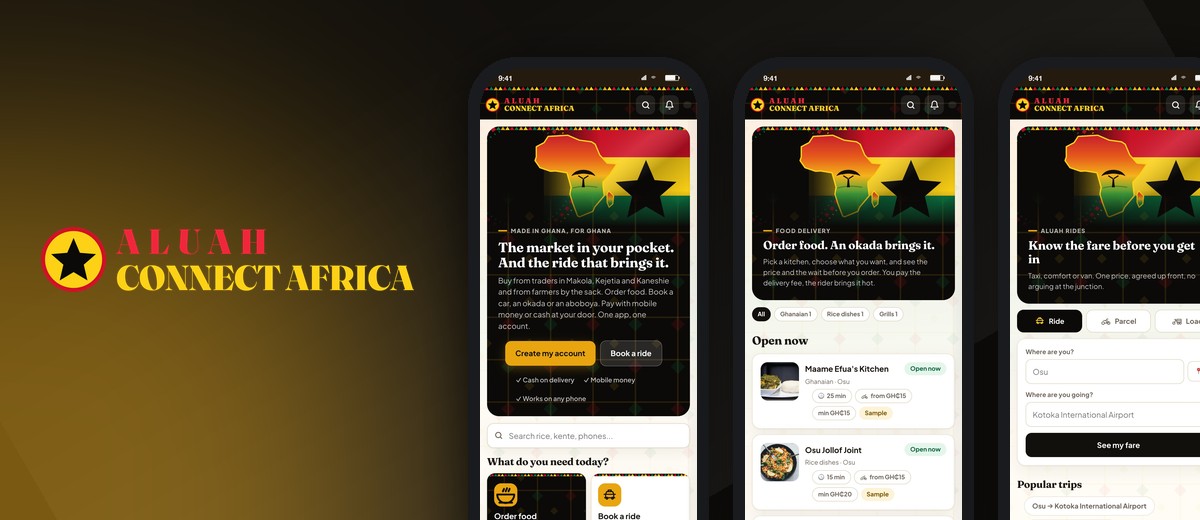
One app for Ghana doing the work of four. Buy from traders in Makola, Kejetia and Kaneshie and from farmers by the sack. Order food and an okada brings it. Book a taxi, rent a car for the funeral, send a parcel by okada or move ten bags of cement by aboboya. Pay with mobile money or cash at your door. Every price in cedis, agreed up front.

Real screens from the live app. Sample shops and cars until the traders sign up. Swipe.
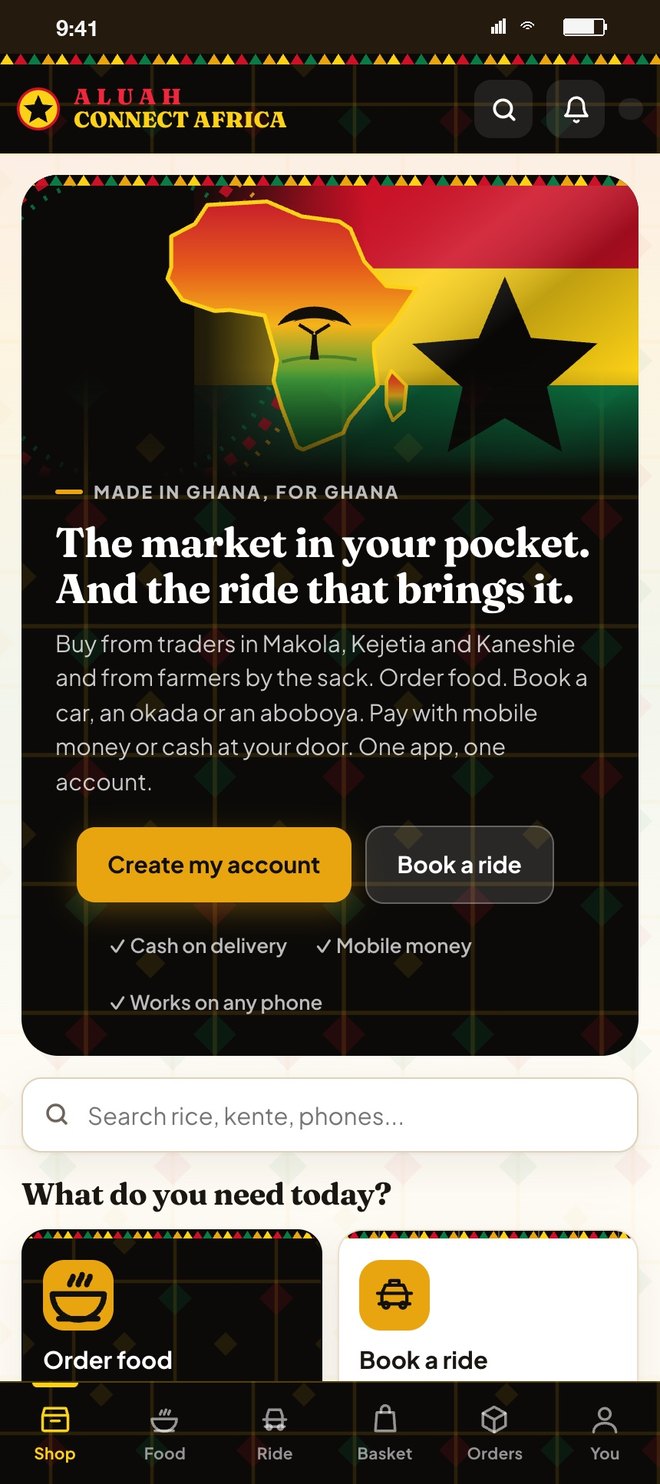
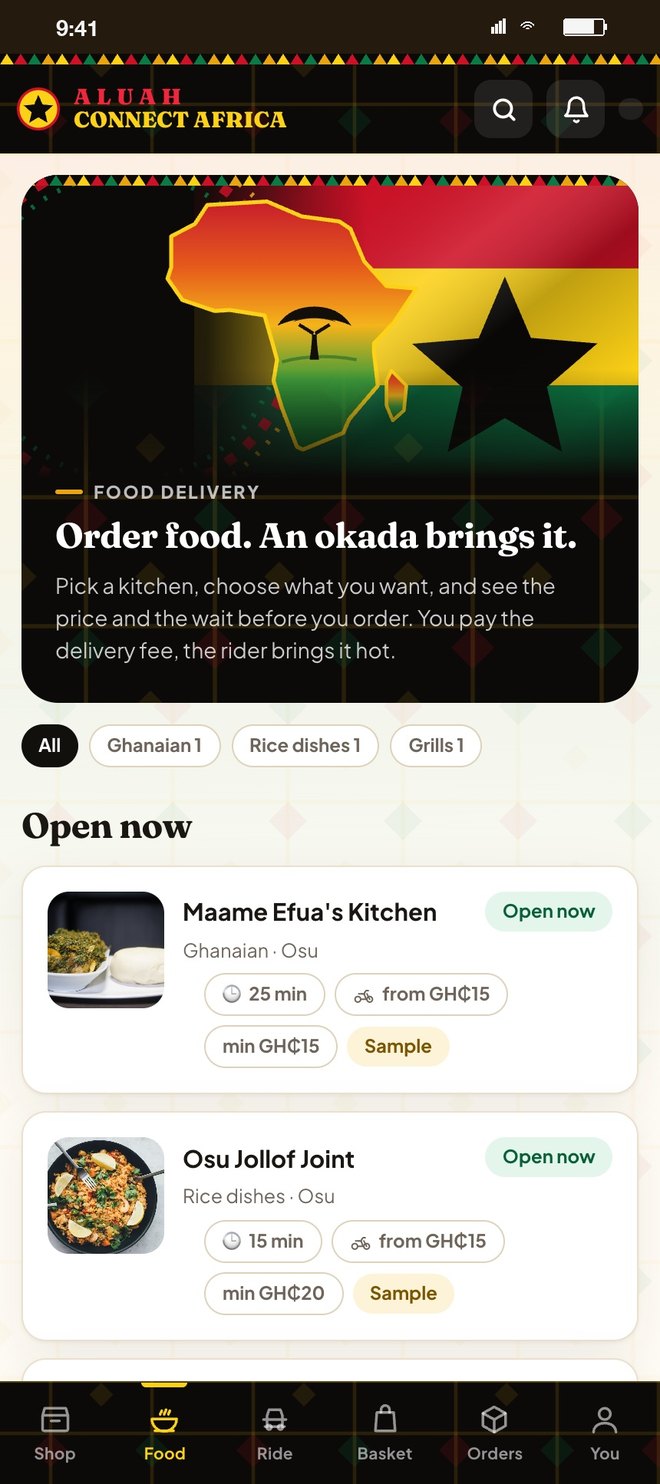
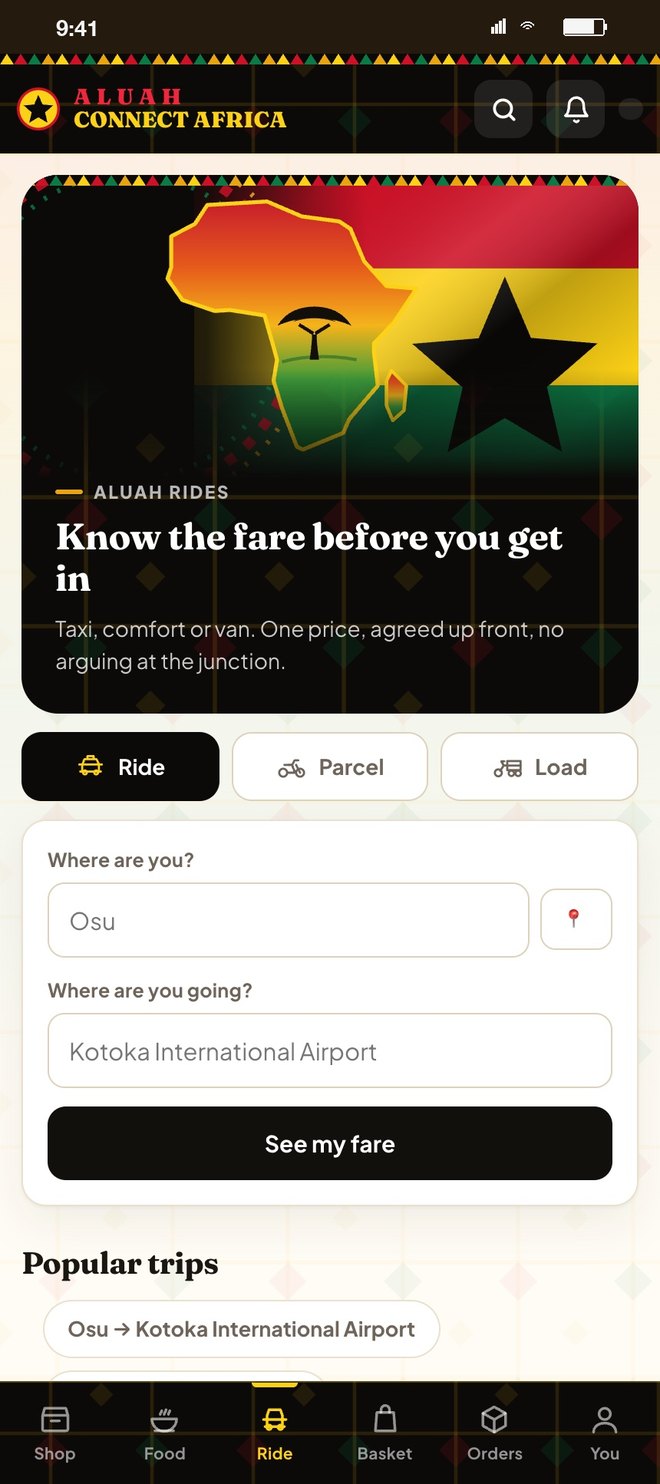
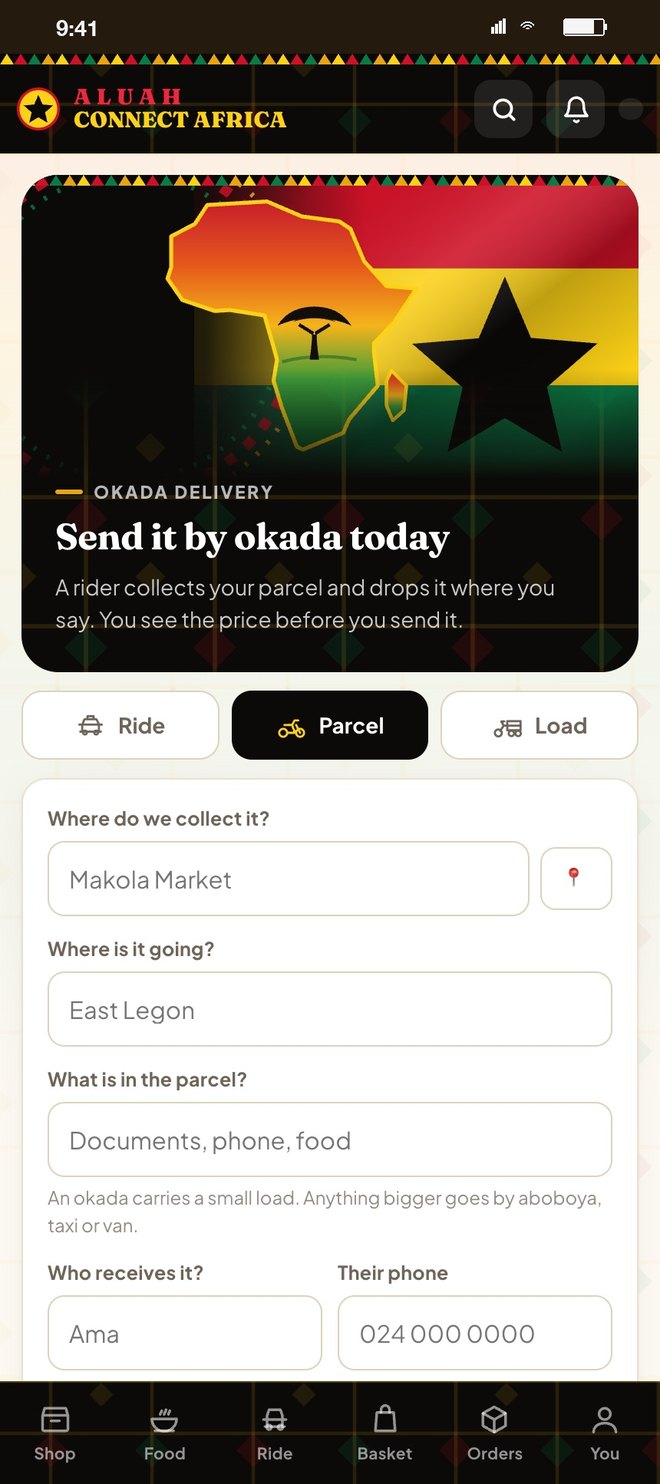
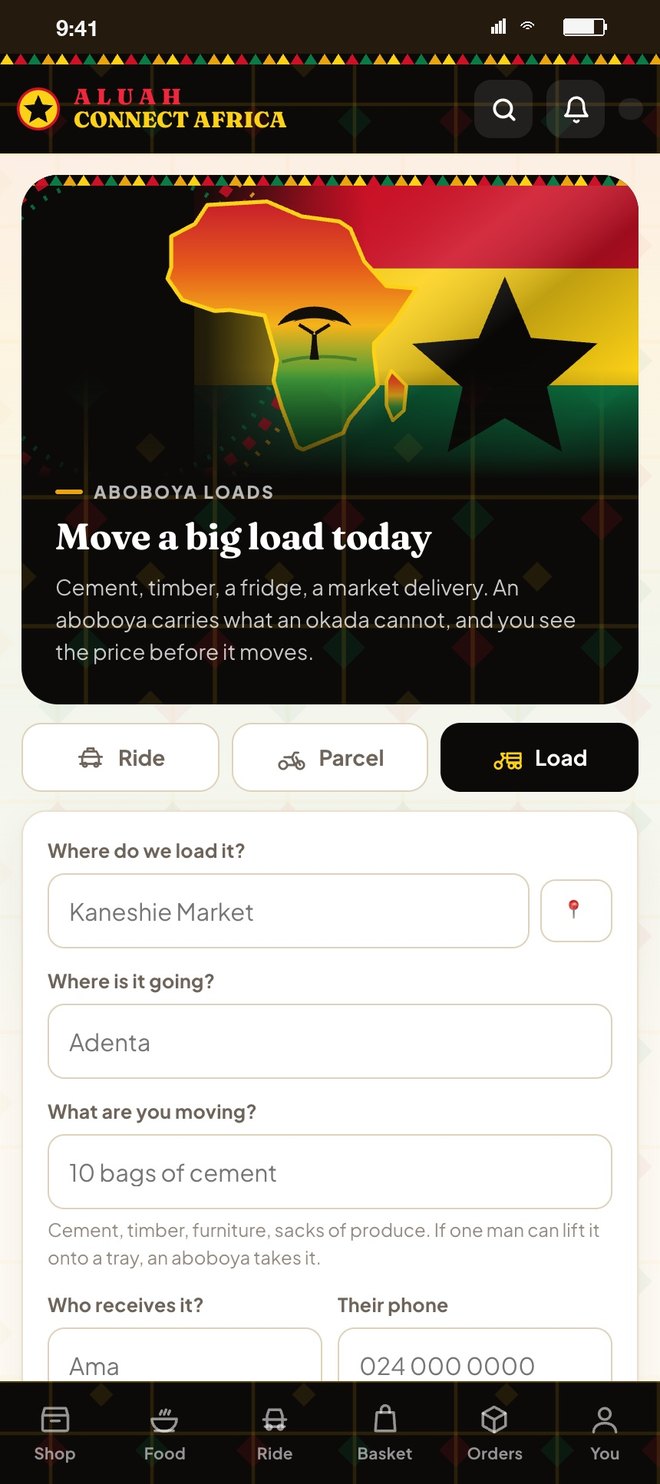
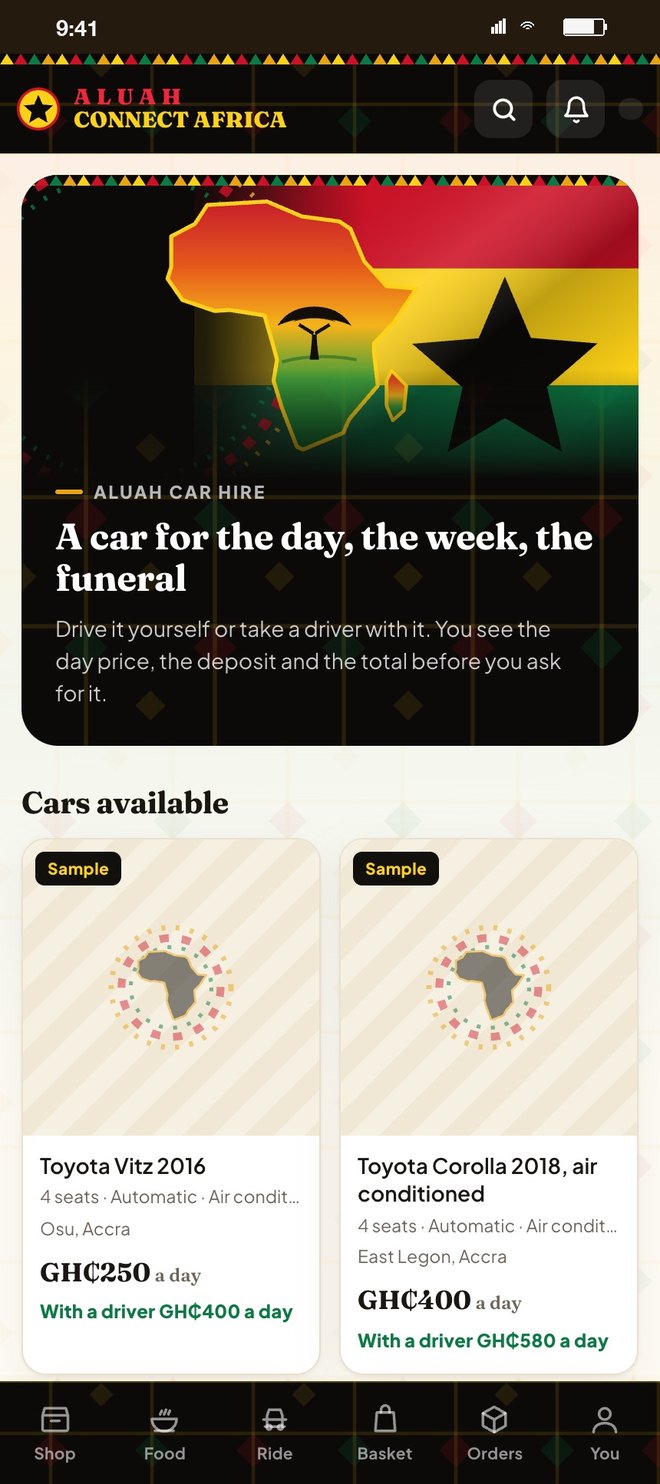
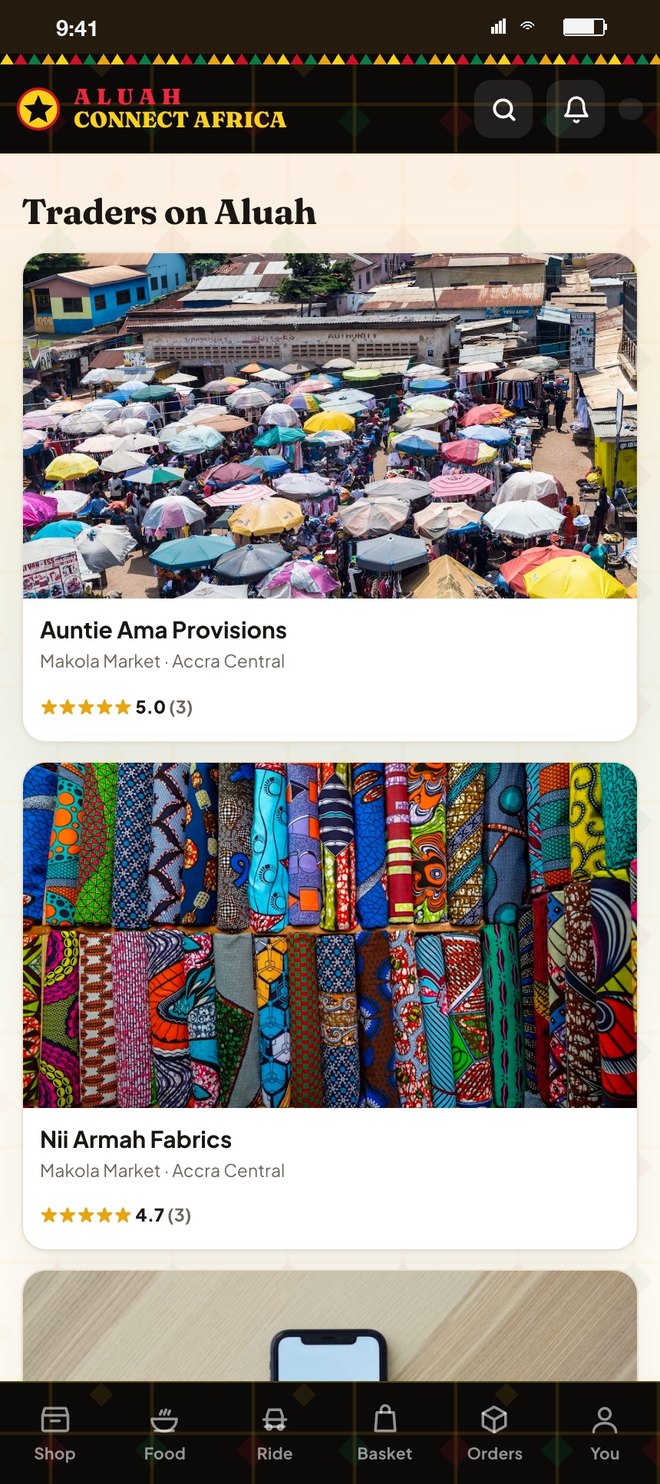
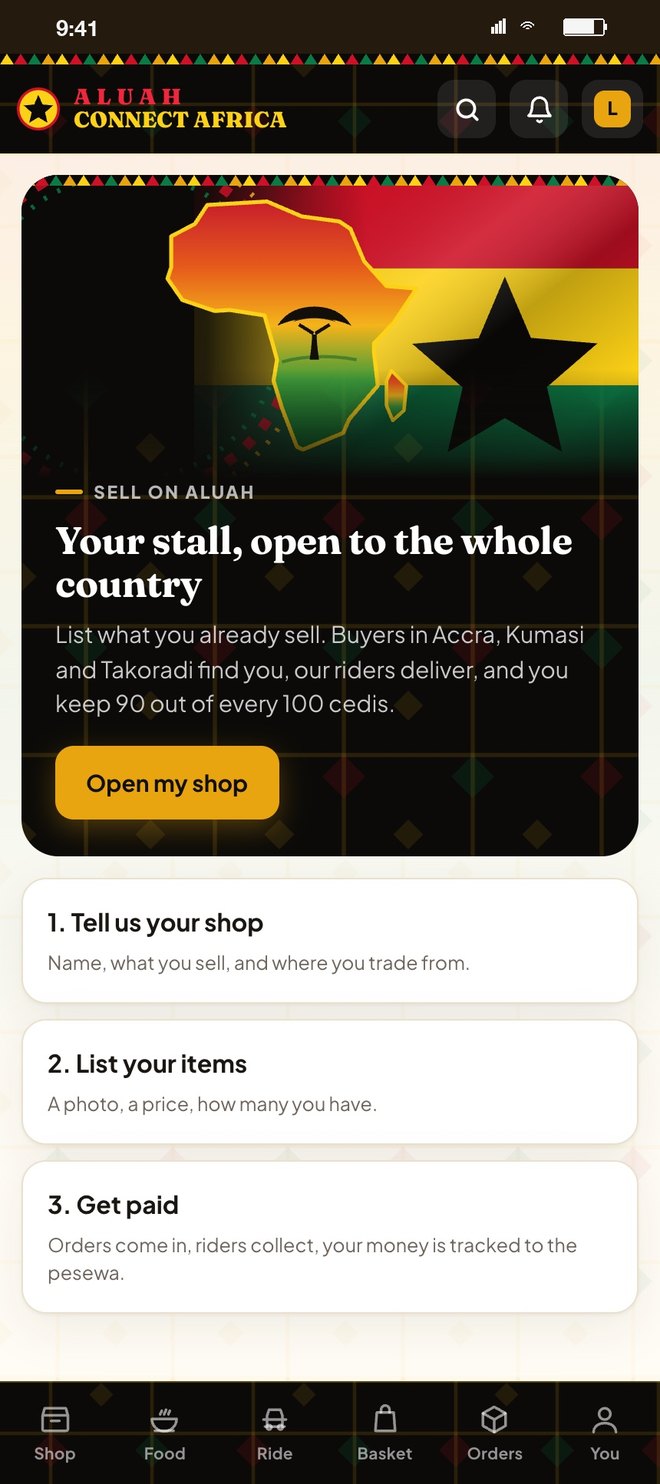
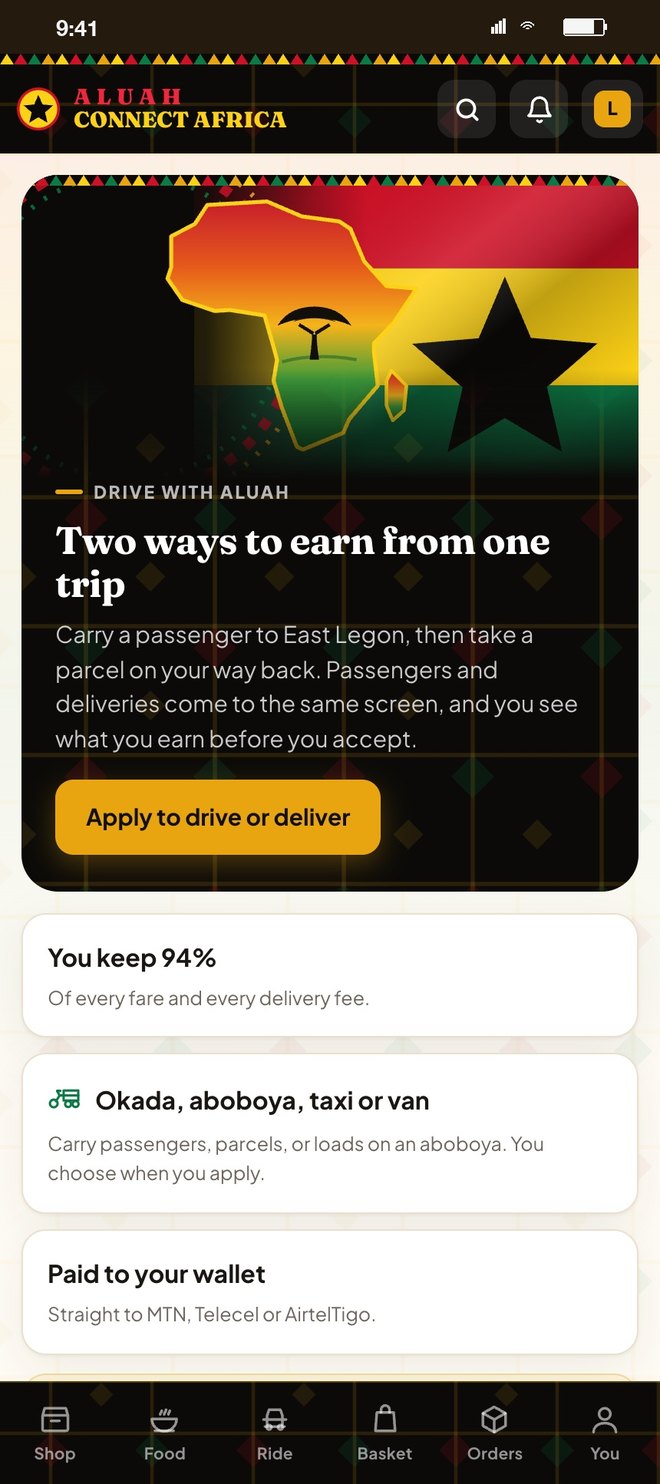
Aluah Connect Africa is live on the web today, taking sign ups from traders and drivers ahead of the launch. The App Store and Google Play listings are next.
Open Aluah Connect Africa →Smaila applied on 31 July 2026. The whole brief was one line: "I want to build an app just like Amazon for Africa, which can be used for both shopping app and shared rides." He is a database administrator. He had never paid for an app builder before. Under "anything else" he wrote: I want to speak to someone.
He did. On the 6 August call he explained how Ghana actually moves: the okada riders who pick food up and deliver it fast, the restaurant owners who need a menu people can order from, the traders at Makola who sell to the whole country if somebody carries it. By the 13th he had a name, a logo spec, a launch date and a farmer's switch.
He flies to Ghana at the end of October and launches with the minister of education in the room. His words: "I can even let them start signing up, so they can start their paperwork before I even get there." So the app took sign ups from day one.
Fourteen aisles, from rice and kente to phones and school books. Traders open a stall, farmers get a shelf with bulk prices, buyers pay by mobile money or cash at the door.
Kitchens list their menu, the price and the wait show before you order, and the nearest rider brings it hot.
Taxi, comfort or van, priced by the kilometre and agreed up front. Parcels by okada. Loads by aboboya. Cars by the day with a deposit. Okada passengers sit behind a switch until his licence says go.
Every seller and driver waits for his approval, papers attached. Commission, orders, trips, drivers online, what he owes out, and a feature sheet he can send his video agency that never goes stale.
Every price is in cedis and stored in pesewas. Payment is mobile money or cash on delivery, because that is how people pay. The vehicles are the ones on the road: okada, aboboya, taxi, van. Drivers are paid to MTN, Telecel or AirtelTigo. The home screen is the flag and the map of Africa he asked for three times on one call, with the kente motif from his own reference drawn in.
And the wordmark is his spec, word for word: ALUAH in the flag red, CONNECT AFRICA in the flag gold, the same size, not a subtitle.