← All buildsThe App You Want
Build story

Next Hire: most candidates never hear why, so we built the hiring app where the file cannot close until somebody writes it down.

A two sided hiring app for an event staffing business. It sits alongside wherever a job is already posted. Recruiters screen every applicant against a requirements checklist, run the interview on a second checklist typed live in the room, and then write the candidate a note in their own words. Candidates join free, see exactly where they stand on every role, and keep every note anyone has ever written them.

Paid 6:05pm, live 7:41pm, the same Wednesday Two doors in, one file: candidate and hiring No closing a file on anyone interviewed until a person writes the note

Next Hire icon
Next Hire
Maria Monchel · built by The App You Want
Requirements checklistInterview checklist, typed liveThe note, written by a personWhere I standApply link per roleRecruiter, interviewer, admin
Real screens
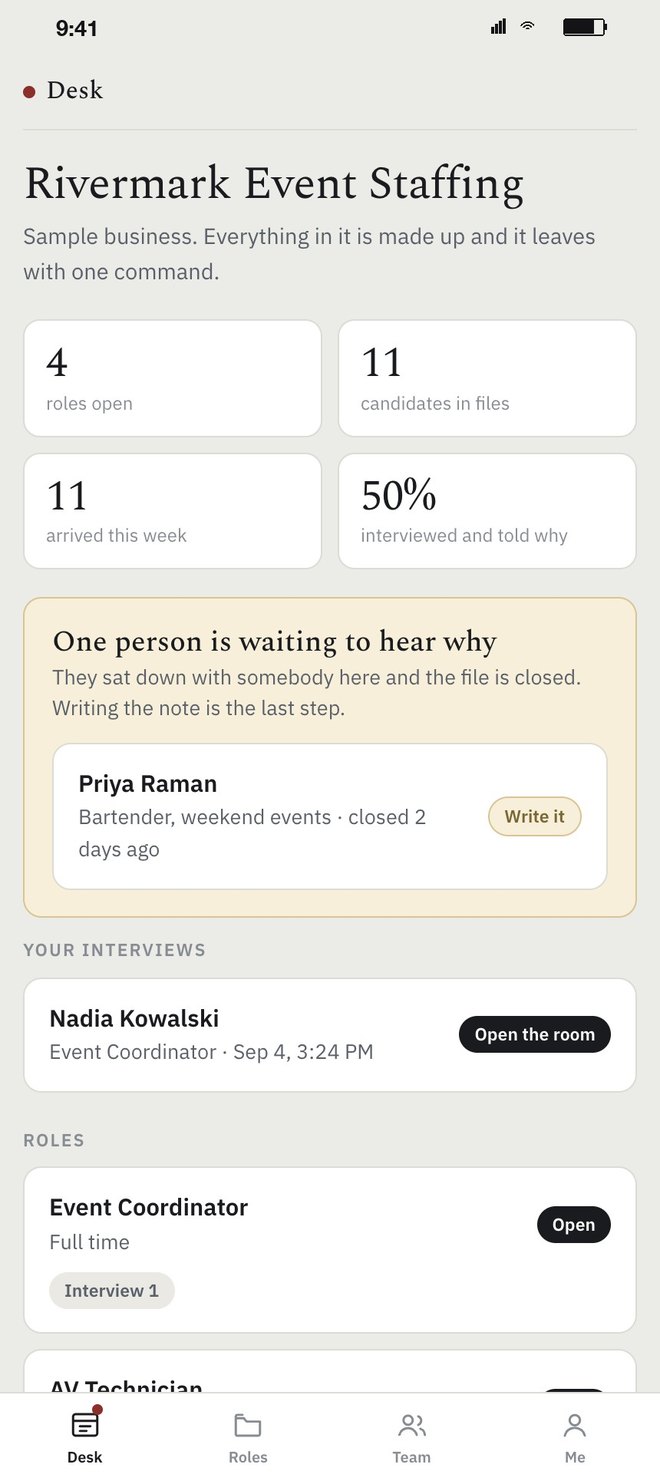
The hiring desk for a sample staffing agency: 4 roles open, 11 candidates in files, 11 arrived this week, 50% interviewed and told why, a manila box saying one person is waiting to hear why with a Write it button, then your interviews and the open roles
The deskRoles open, candidates in files, and the one number that matters here: how many people who sat down were told why. Anyone owed a note is at the top until it is written. Sample business shown.
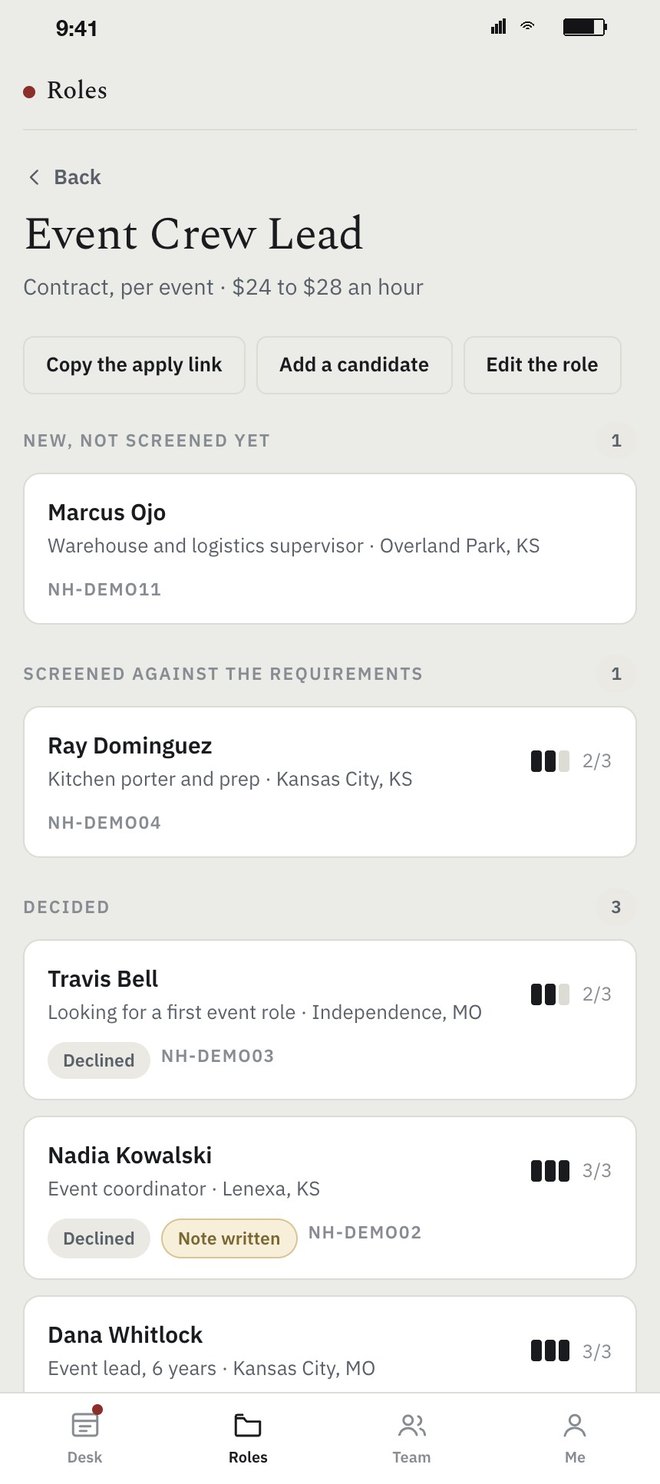
The pipeline for an Event Crew Lead role: buttons to copy the apply link, add a candidate and edit the role, then candidates grouped as new not screened yet, screened against the requirements with a 2 of 3 score, and decided, with Declined and Note written tags
The pipelineOne role, every candidate in it, in the order the process runs. New, screened with their score, decided. Each role has its own apply link to drop next to the posting on Indeed or anywhere else.
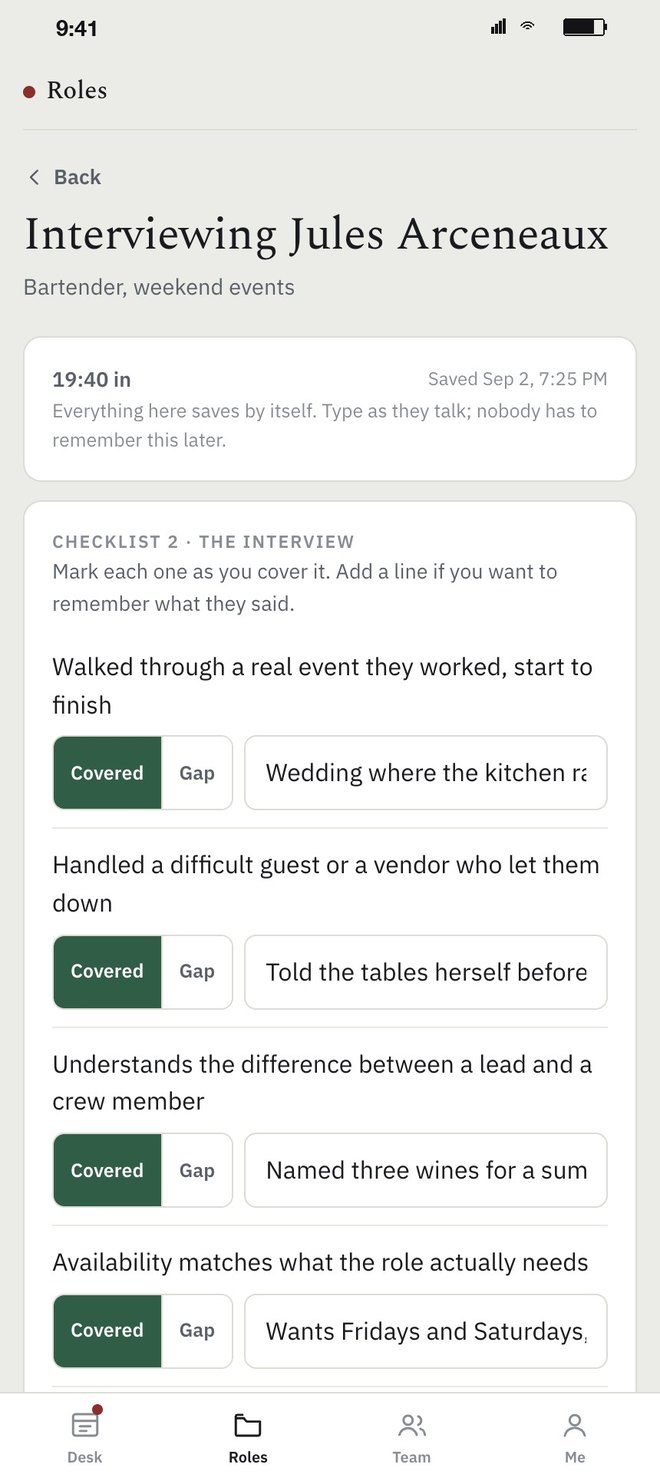
The interview room, 19 minutes in, for a weekend bartender: checklist 2, the interview, with Covered and Gap toggles on each line and a note typed beside each one, such as told the tables before being asked
The roomThe second checklist, worked live while the candidate talks. Covered or gap on every line, a note beside it, and it saves by itself as they type. Nobody has to remember the interview later.
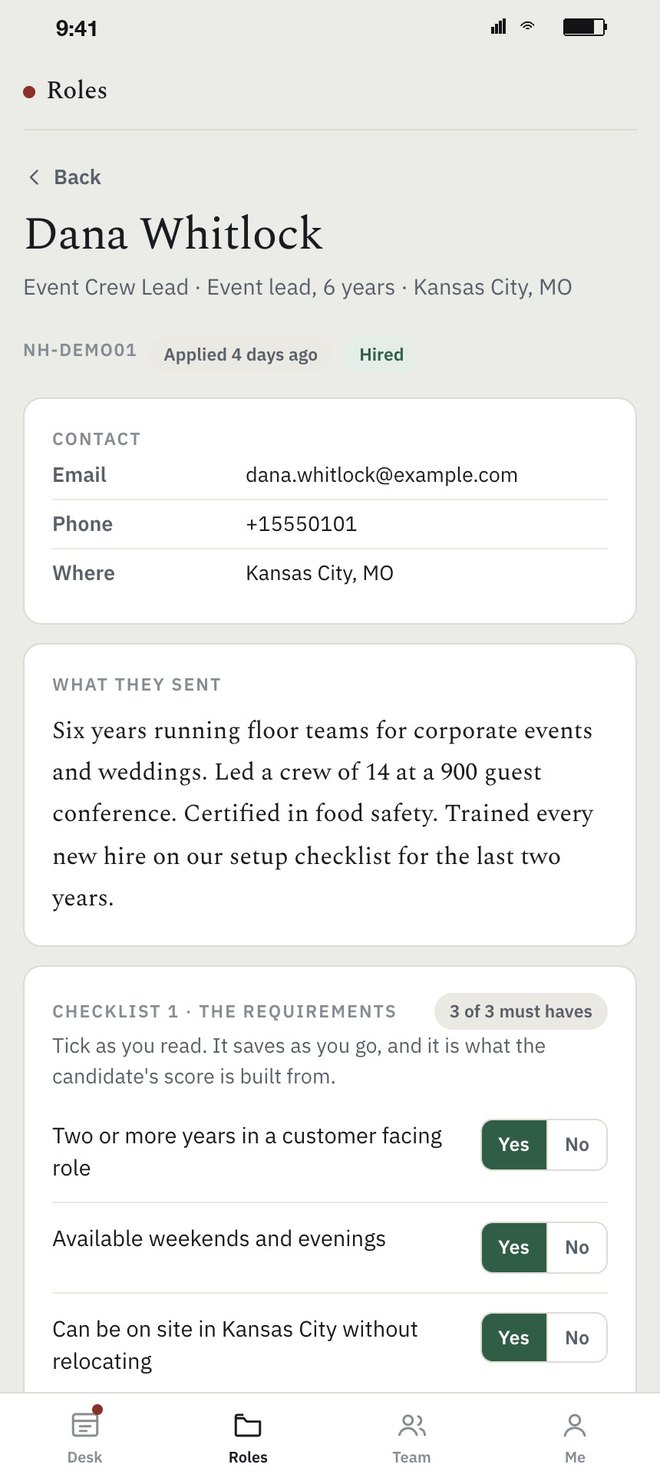
A candidate's file: contact details, what they sent, and checklist 1, the requirements, with Yes and No toggles showing 3 of 3 must haves, tagged Hired
The fileWhat the candidate sent, then the requirements checklist ticked as the recruiter reads. The score on the pipeline is built from these ticks, so interview time only goes to people who fit.
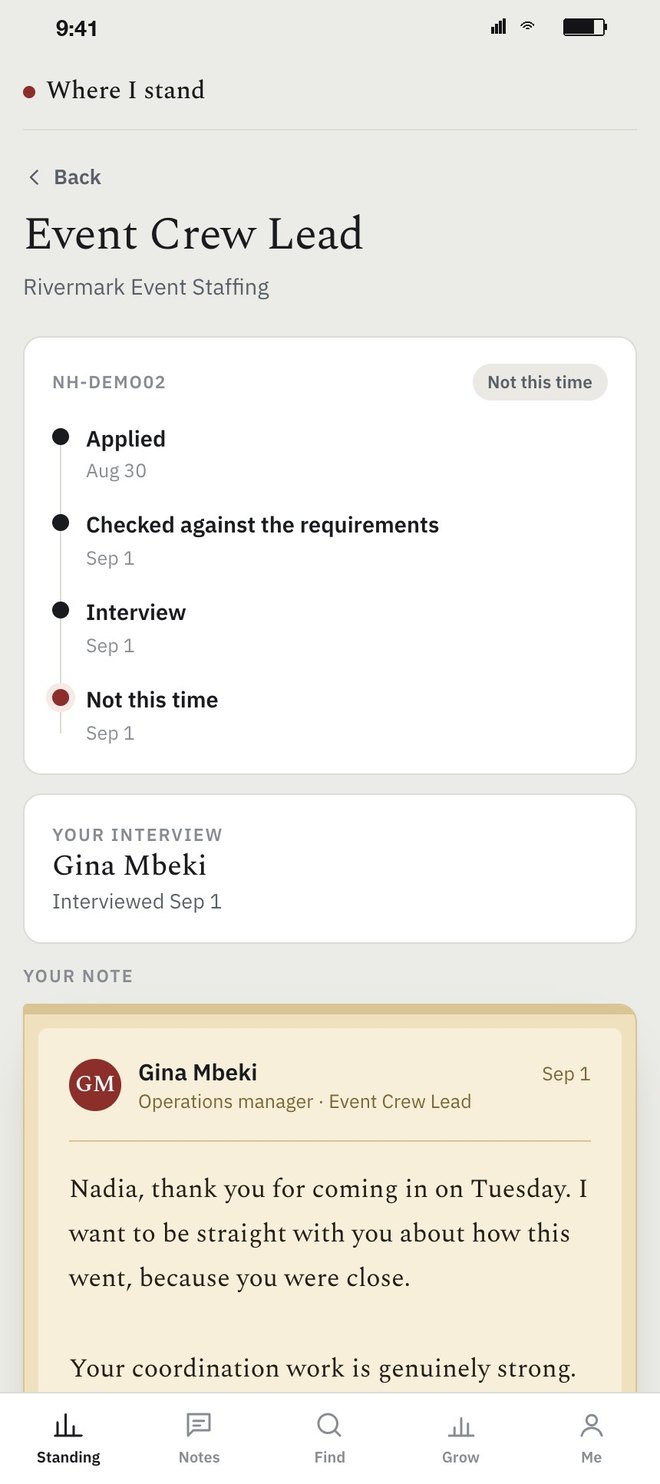
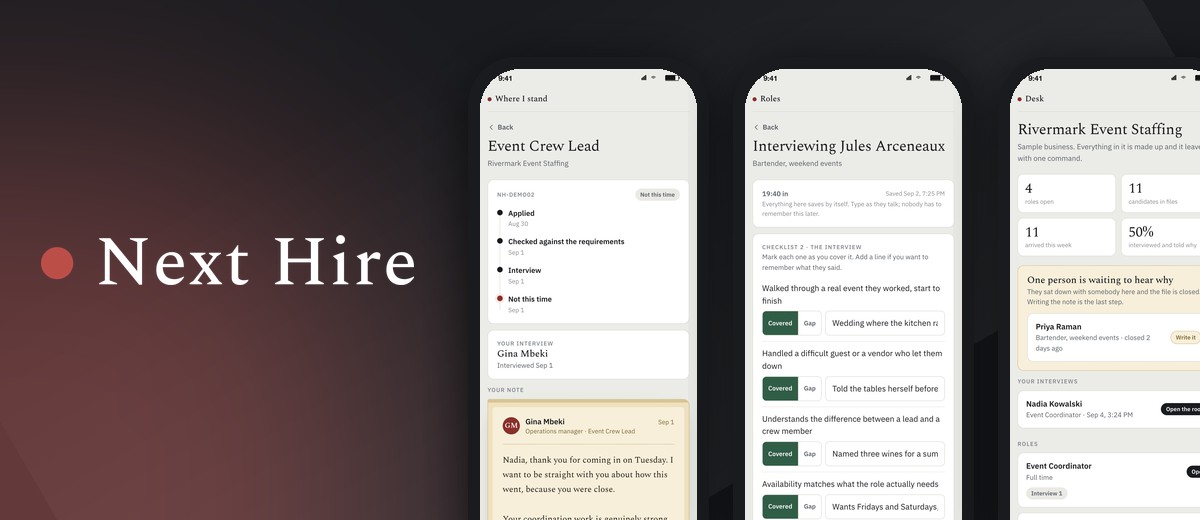
The candidate's view of one role: applied Aug 30, checked against the requirements, interview, not this time, then who interviewed them and the note they were written, on a manila card, starting with thank you for coming in on Tuesday, I want to be straight with you
The noteWhat the candidate sees. Every step the file went through, who interviewed them, and the note that person wrote: what happened, what would make them stronger, and a better fit if there is one.
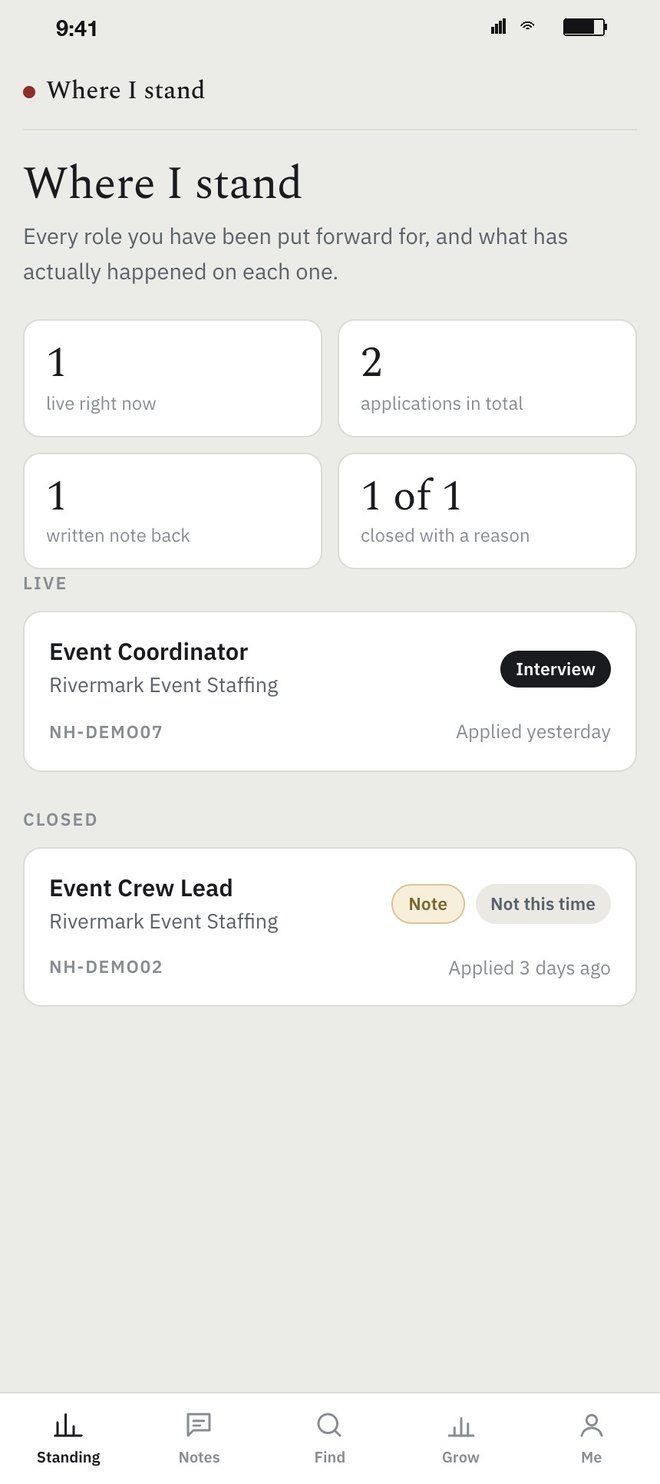
Where I stand: 1 live right now, 2 applications in total, 1 written note back, 1 of 1 closed with a reason, then a live Event Coordinator application at the interview stage and a closed Event Crew Lead one tagged Note and Not this time
Where I standEvery role a candidate has been put forward for and what has actually happened on each. Closed with a reason, counted, because that is the promise the app makes.
See it live

Next Hire is live

It runs in the browser and installs from it on any phone, no app store. Sign in is an emailed six digit code, and the app asks which door you are coming through, candidate or hiring. A business adds its own recruiters, interviewers and admins, and every note goes only to the candidate it was written for.

Open Next Hire →
The challenge
"Assist with the hiring, recruiting and retention of staff. Candidates and recruiters."

That was the application, late on a Friday night, from an event staffing coordinator running hiring out of email and a spreadsheet. The gameplan call was the next afternoon, and the real app came out on that call, not on the form. Two sides. A checklist before anyone gets interview time. A second checklist worked during the interview so it is documented instead of remembered. And the part the owner cared about most: the candidate hears why, in writing, from the actual person who interviewed them. Optional at the resume stage, because a recruiter reads far more resumes than they interview. Required after an interview. The owner said so directly, and the offer was written that way.

Paid at 6:05pm on the Wednesday. Live at 7:41pm, with a sample agency in it so the owner could walk a candidate from applied to told why before adding a single real role.

What we built
Two doors, three checklists, and a note nobody can skip.

Requirements first

Every role carries its own requirements checklist. A recruiter ticks it while reading what the candidate sent, the score lands on the pipeline, and interview time only goes to people who fit. Each role gets an apply link to sit next to the posting wherever it already is.

The interview room

The second checklist, worked live. Covered or gap on every line, a note beside it, saved as it is typed, with a clock running so the interviewer knows where they are. The interview is on the record the moment it ends.

The note

Written by the person who did the interview, in their own words. What happened, what would make the candidate stronger, and a better fit if there is one. Nothing in the app writes it for them, and it goes only to that candidate.

The candidate's side, free

Candidates join free, see every role they have been put forward for and exactly where each one stands, and keep every note. A business adds its own team as recruiters, interviewers or admins, each able to do only their part.

The signature feature
The file cannot close on anyone interviewed until a real person has written them the note.

Most hiring software makes the rejection a button. Here it is a page. When a recruiter decides against somebody who sat down for an interview, the file stays open and the person is listed on the desk as waiting to hear why, until the interviewer has written what happened and what would make them stronger next time. At the resume stage the note is optional, because the numbers there are different. After an interview it is required. Every note is stamped written by a person, not generated, and confidential to the candidate who receives it.

Required after an interviewOptional at the resume stageWritten by a personConfidential to the candidate
How it moved
Applied on a Friday night, mapped on the Saturday call, paid and live the same Wednesday evening.
28 Aug
11:19pm, the application: assist with the hiring, recruiting and retention of staff, candidates and recruiters. Replacing email and simple spreadsheets.
29 Aug
3:00pm, the gameplan call. The two sides, the checklists, and the note that is optional at the resume stage and required after an interview. 3:58pm, the offer in writing, from the call and not the form, under the owner's own name for it: Next Hire.
2 Sep
1:05pm, the owner asks for the payment link. 6:05pm, paid. 7:41pm, live: two doors in, roles with a requirements checklist and an apply link each, the interview room, the note, the candidate's standing on every role, and a team of recruiters, interviewers and admins.
Want an app like this?
Tell us the app you want See it live