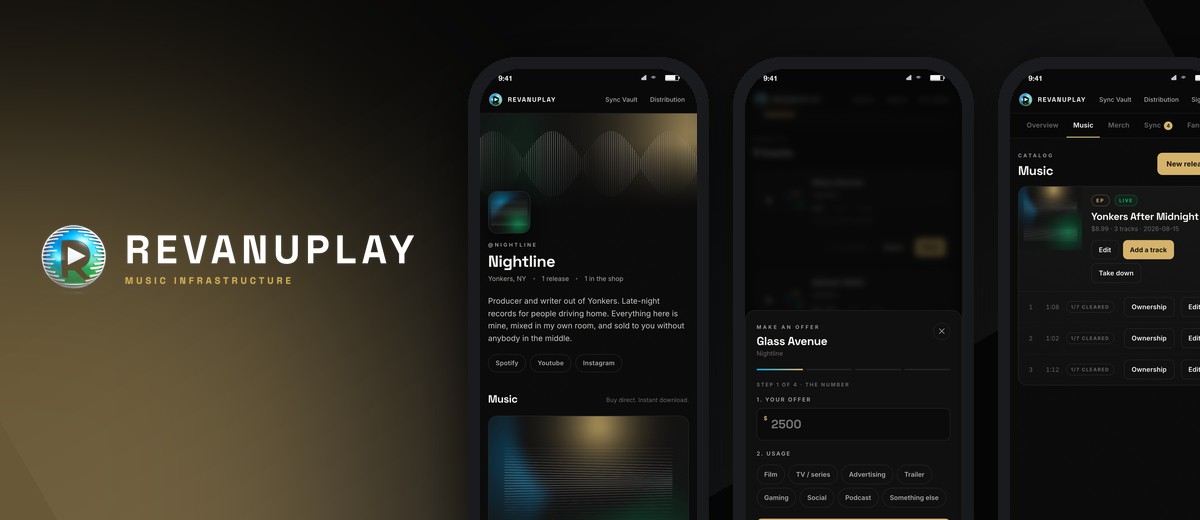
A music distribution owner wanted more than distribution. The app gives every artist on the roster a branded storefront at one address: a player fans sample before they buy, albums and singles with instant download, merch, a fan list that stays the artist's own, and a Sync Vault where a music supervisor searches by genre, mood, key and use, reads the rights on every writer, and names their own fee. Paid on a Friday night. Live Saturday morning.

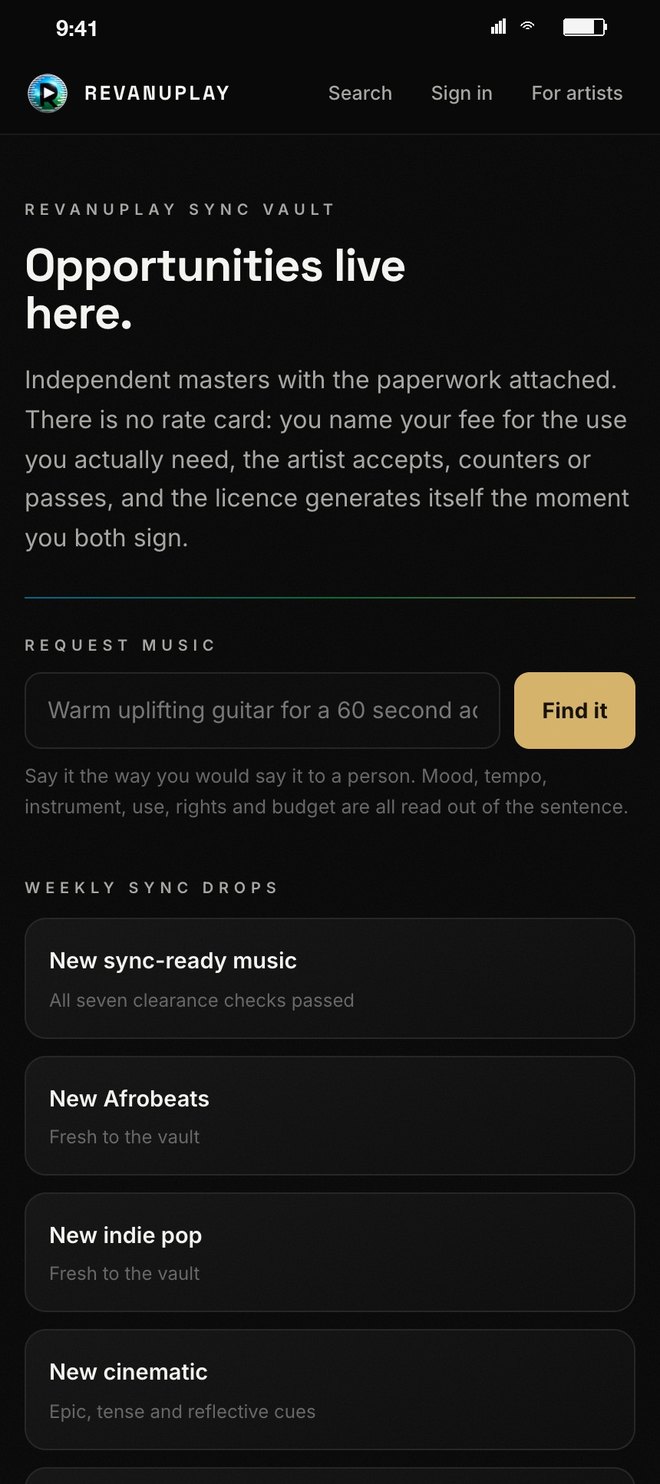
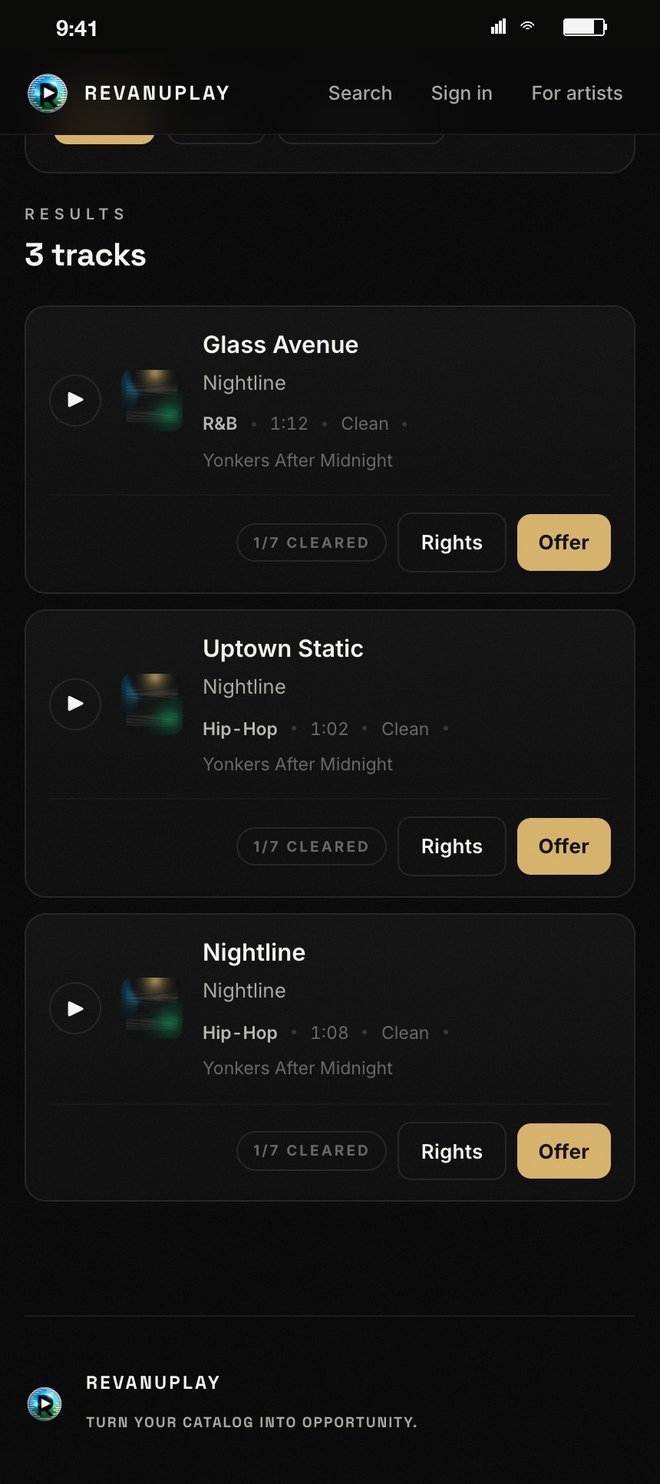
Open the Sync Vault on your phone and search it like a supervisor would. The artist side sits behind a one code sign in.
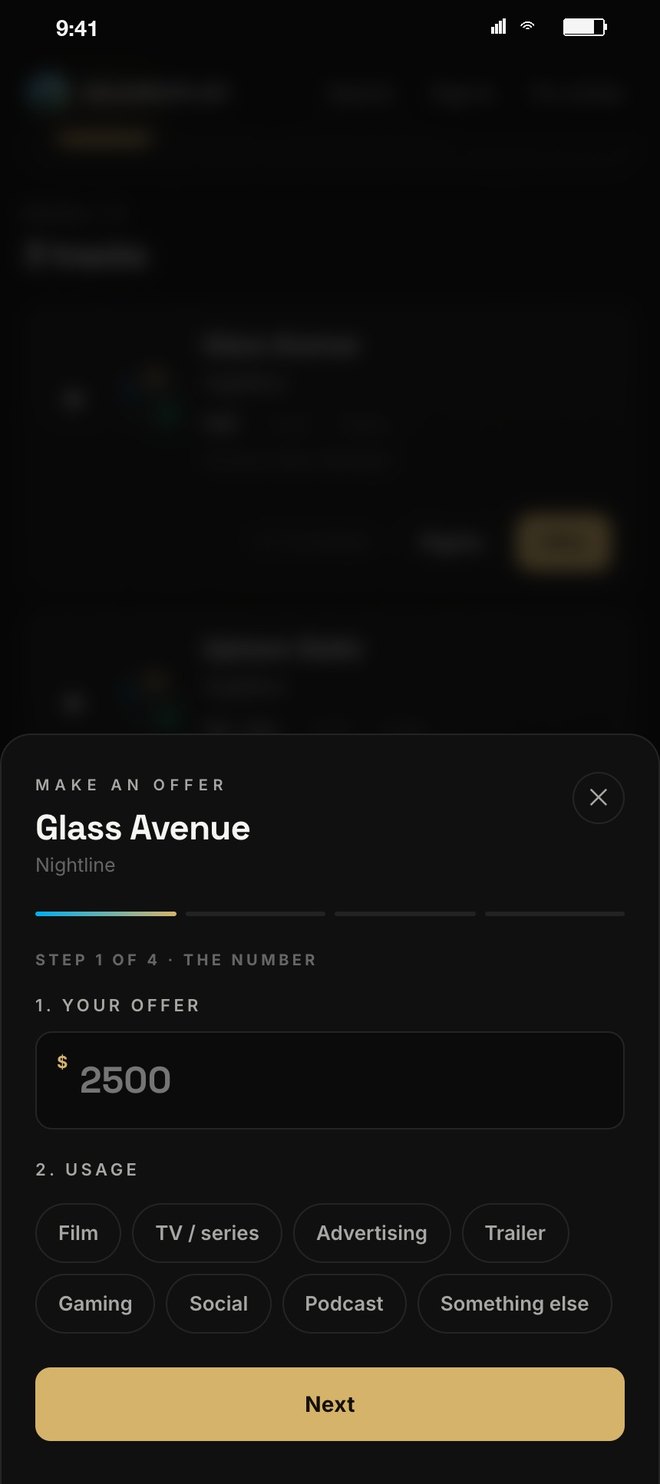
Open the Sync Vault →The application came in at 6:53 on a Thursday morning from the owner of a music distribution company: a white label storefront for every artist, selling albums, singles, merch and licensing, with a fan list and a back end that tracks all of it. The call was at 2:30 that afternoon and it changed the shape of the licensing. Every artist and every sync brief has a different rate, so instead of a price list, a supervisor would name their own amount and the artist would accept, counter or pass. The offer went out at 3:05pm with that in it.
Paid Friday at 8:34pm. Six minutes later a brand kit arrived: the orb, the wordmark, the black and gold, the line "More than distribution. Build what comes next." Saturday at 10:23am the app was live in that look, with the storefronts, the player, the shop, the fan list, the Sync Vault and a quality and ownership audit on every upload.
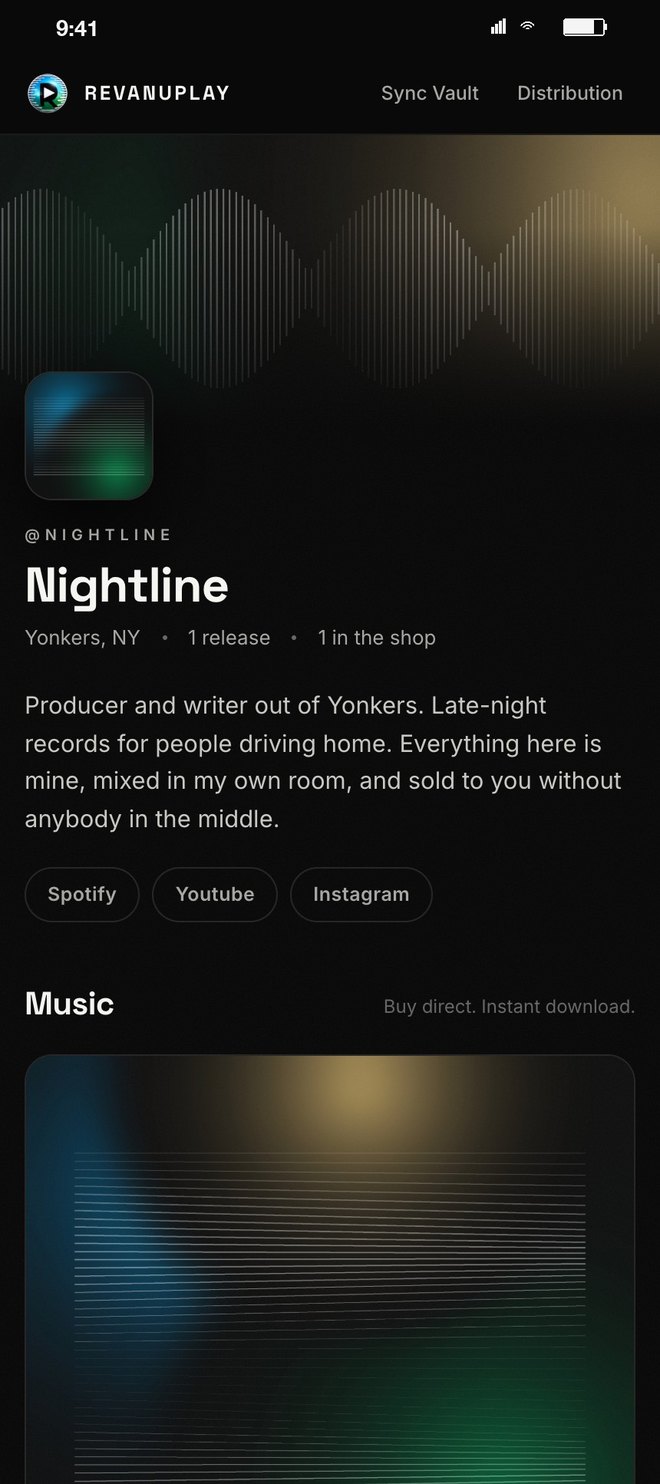
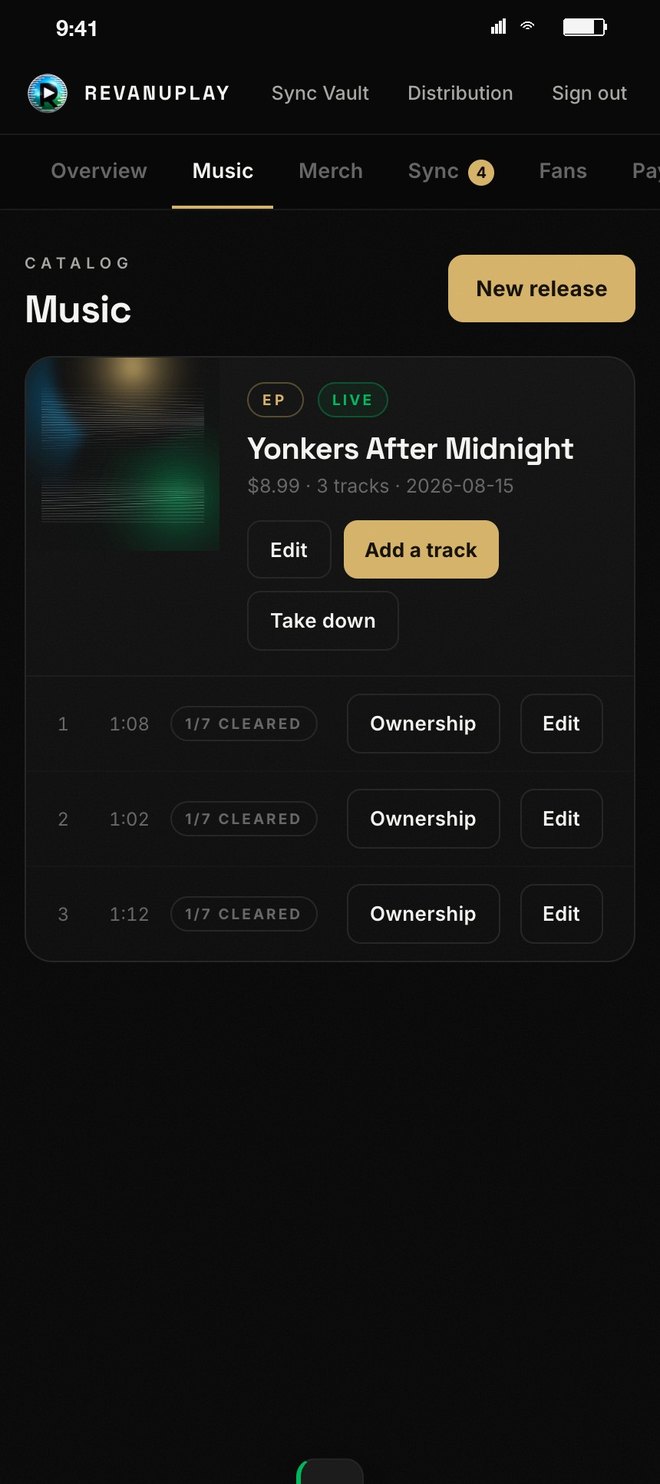
One address per artist. Banner, bio, socials, catalog with a player fans sample before they buy, merch with sizes, and a fan list that belongs to the artist. Live from the minute an artist signs up.
Albums, singles and merch bought straight from the page, with instant download on the music. Each artist connects their own payouts in their own name, with the platform's fee taken on the way through.
A supervisor searches or describes what they need in a sentence, previews 45 seconds, reads the rights, and names their fee with use, project, territory, term, media and exclusivity. Then a deal room, a signature, and a license generated from the terms.
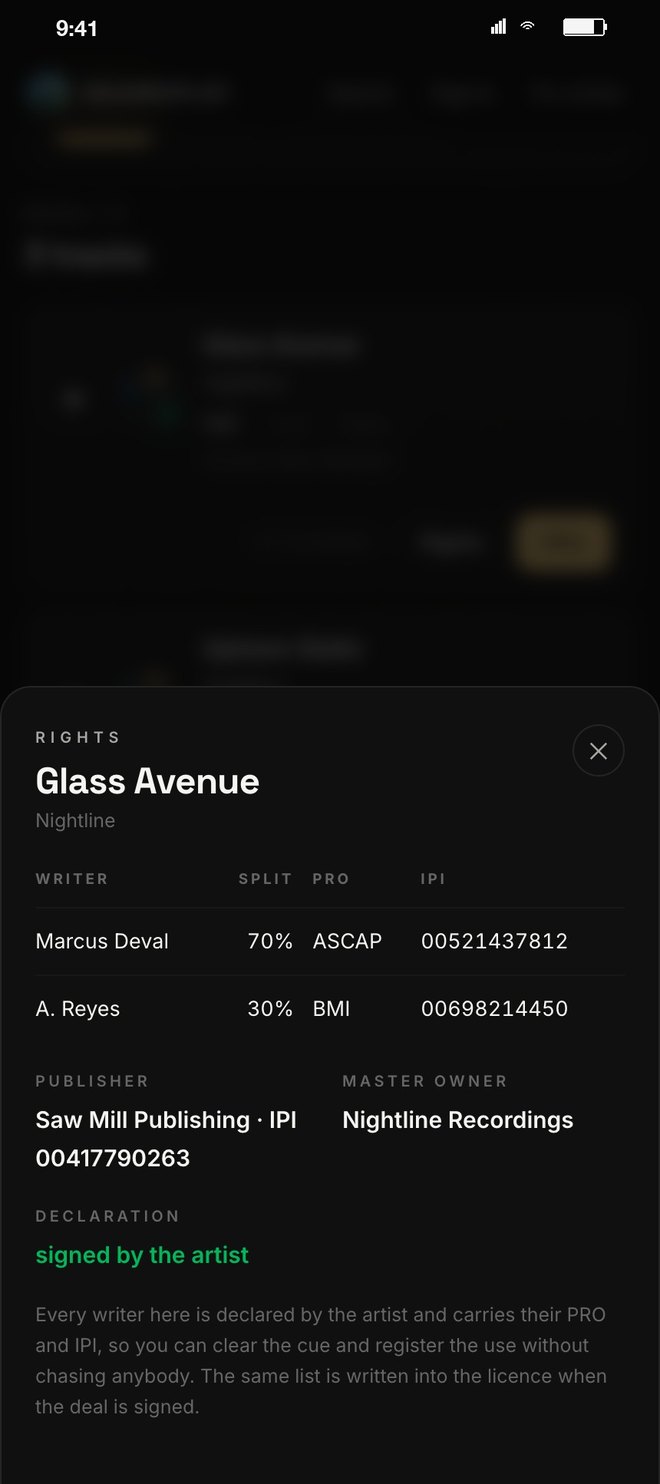
Every writer on a track carries a split, a PRO and an IPI, and the declaration is signed by the artist. Uploads are audited on the way in for sound quality and ownership. A supervisor sees the whole cue sheet before they offer.
On the second Saturday the owner wrote "I need the sync vault updated" and sent a build map at 12:24pm: the supervisor's whole path, search, track page, rights, clearance, offer, deal room, license, project record, with every filter named. At 2:26pm it was live at bridgerp.com. Every filter on the list. Request Music, which reads a plain sentence and turns it into those filters. Saved searches, weekly sync drops, a deal room with messages and files, and a project record for each license. Four days earlier the owner had asked for one field, the IPI number every writer needs to collect on their music, and by that afternoon nothing could go live, sell or license without one on every writer.