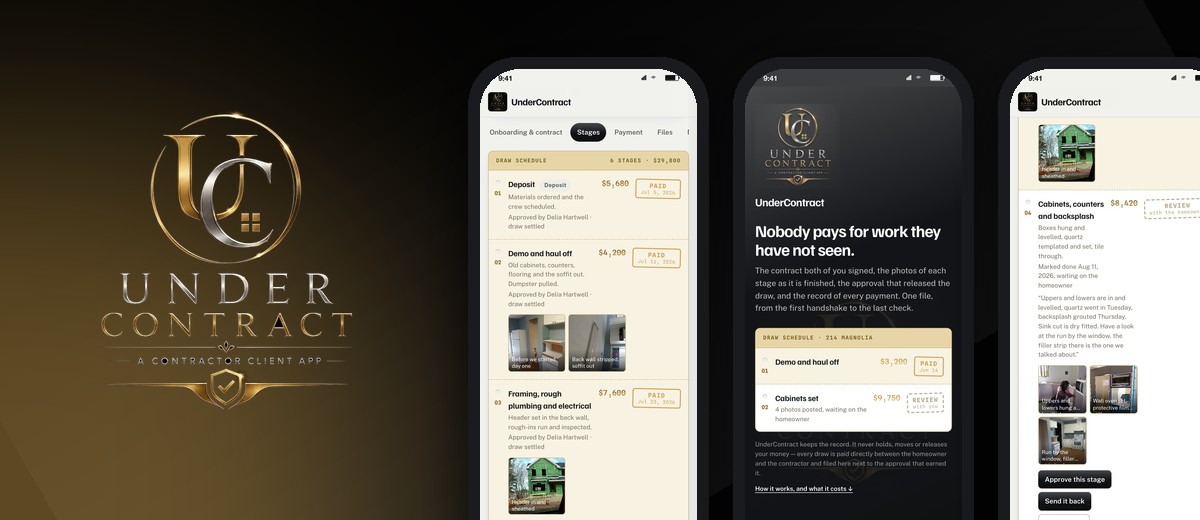
A contractor and a homeowner agree the job in writing before a tool leaves the truck. The work goes up stage by stage with photos. The homeowner approves each stage, or sends it back with a reason, and every payment is recorded against the stage it paid for. The money moves between the two of them. The app keeps the record.

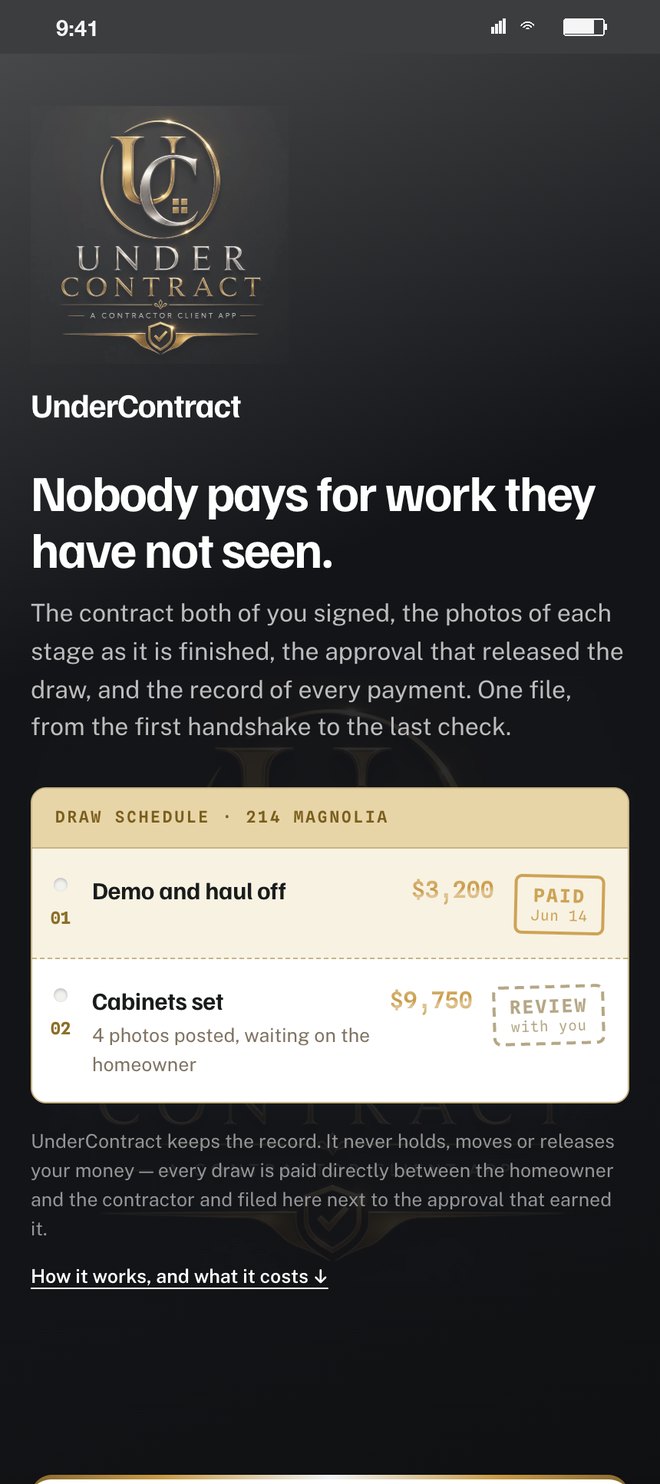
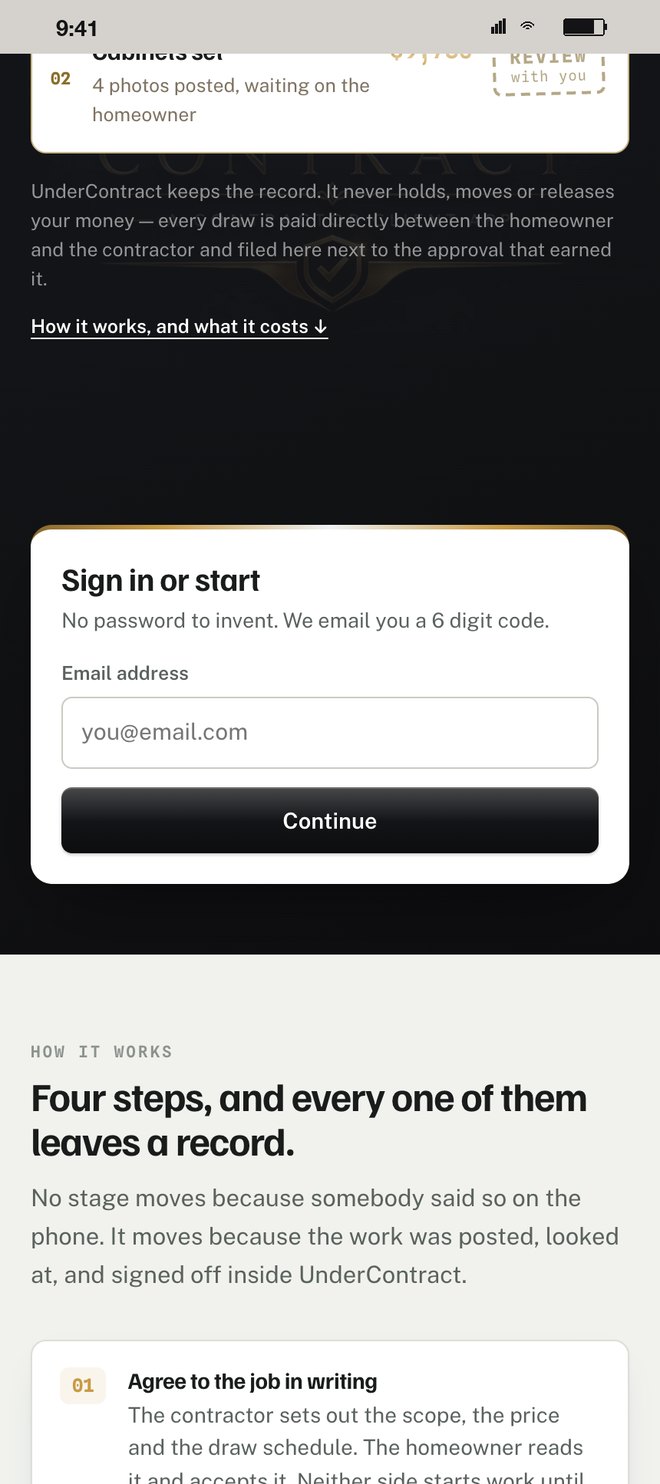
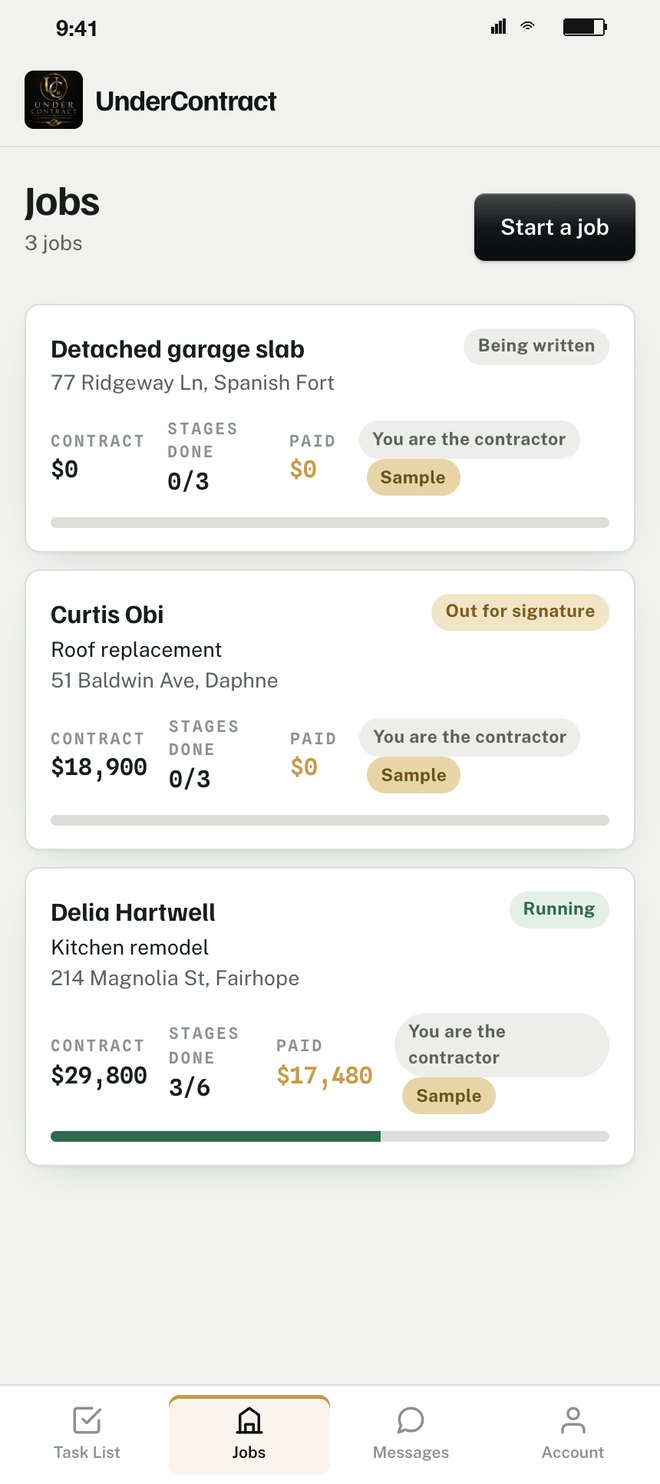
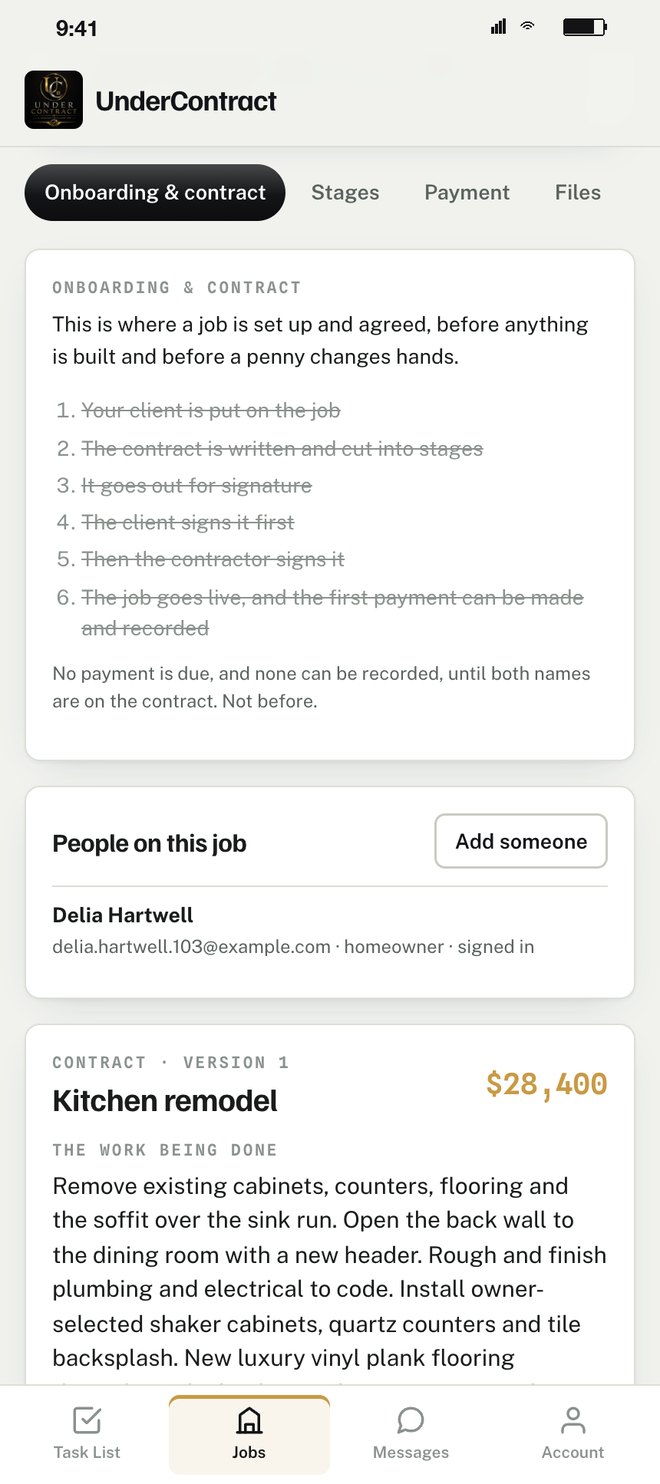
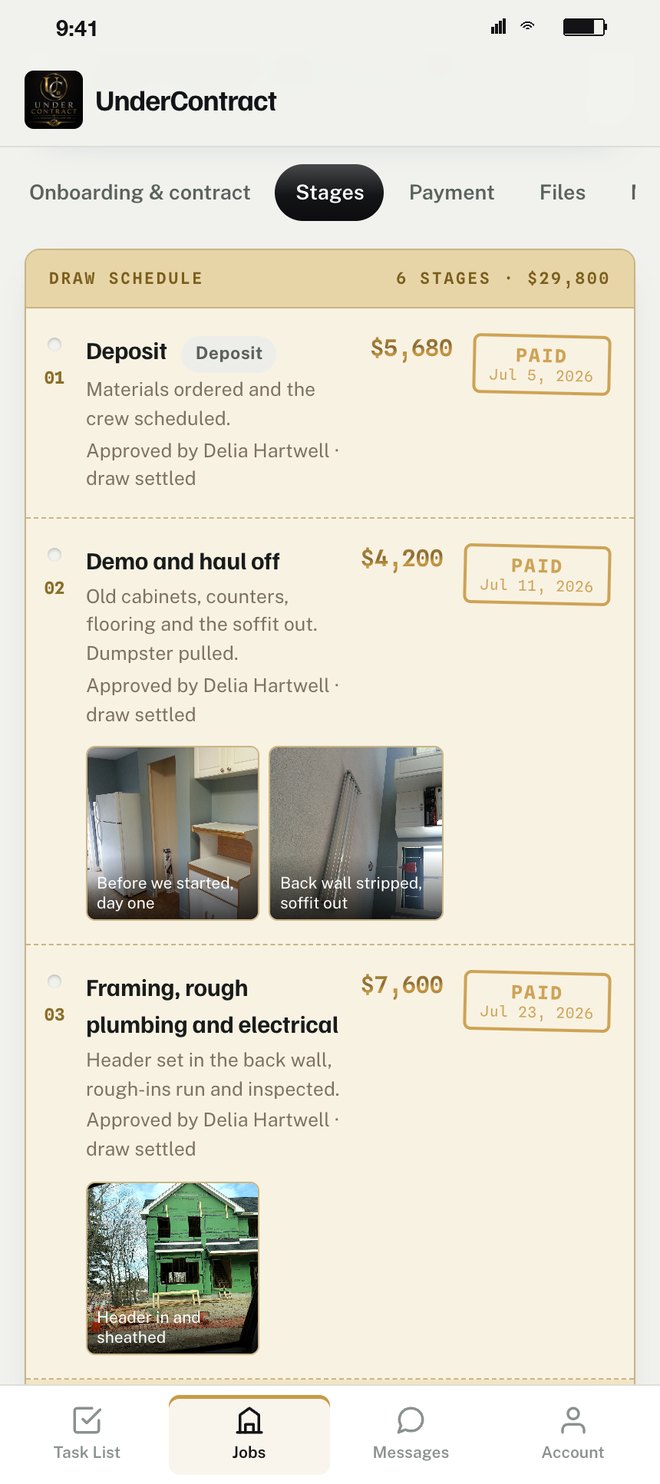
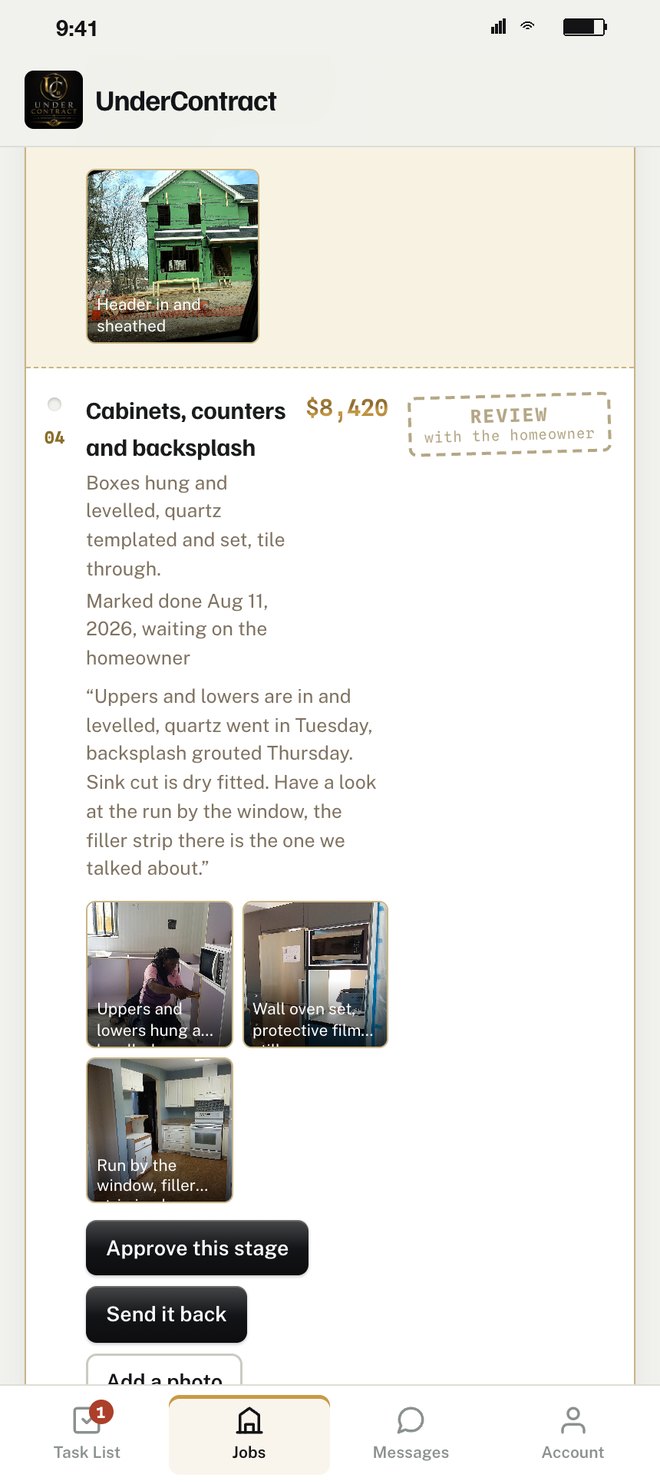
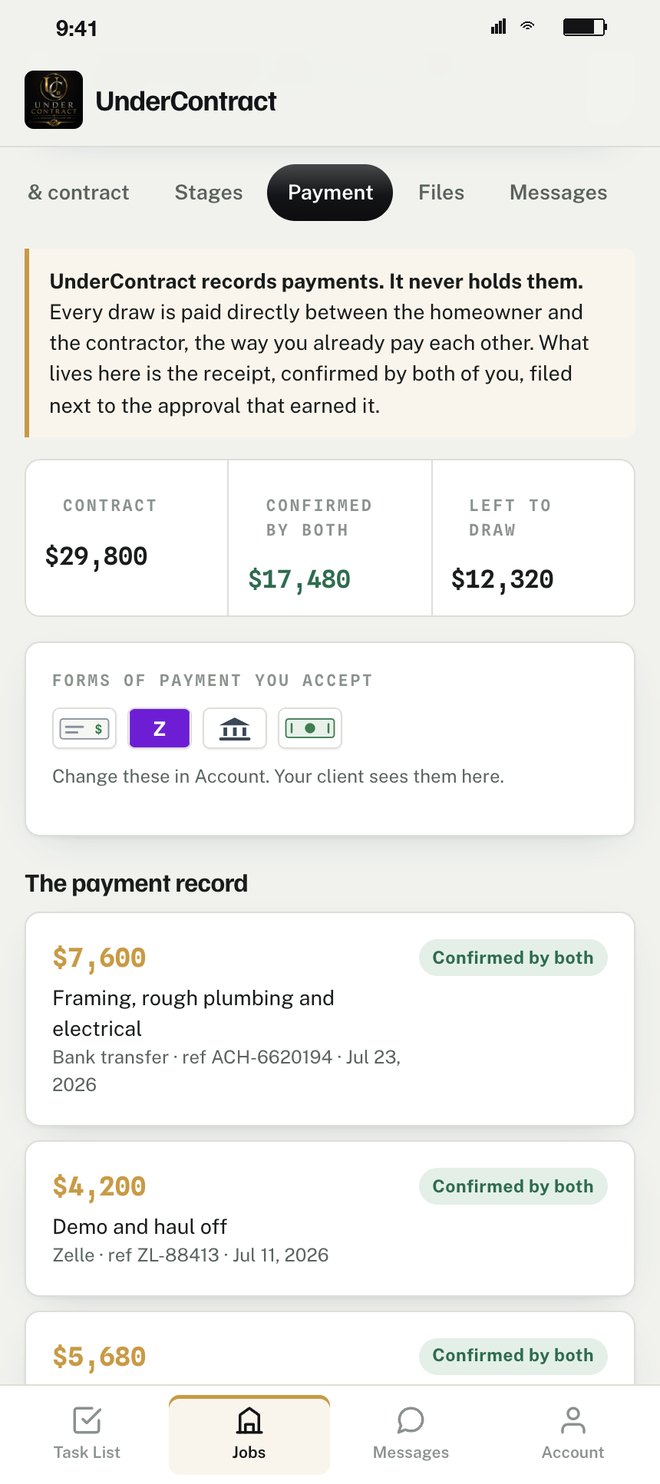
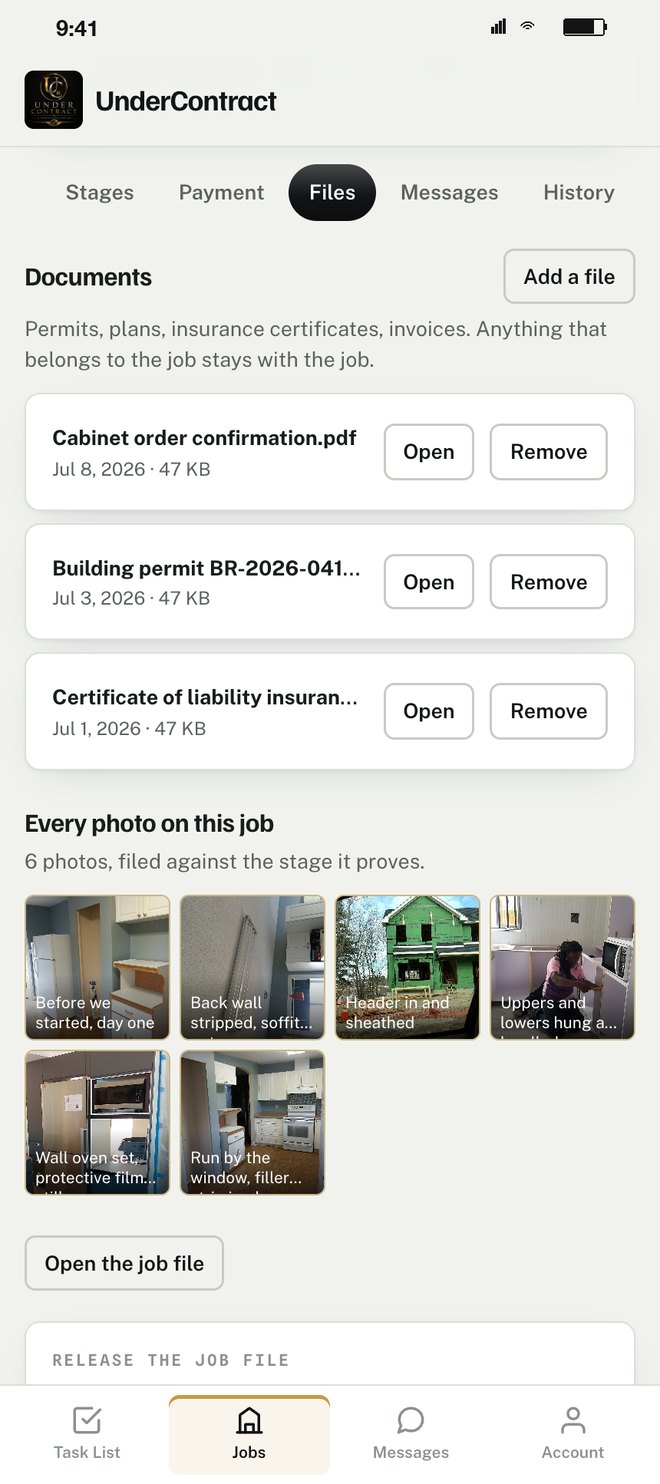
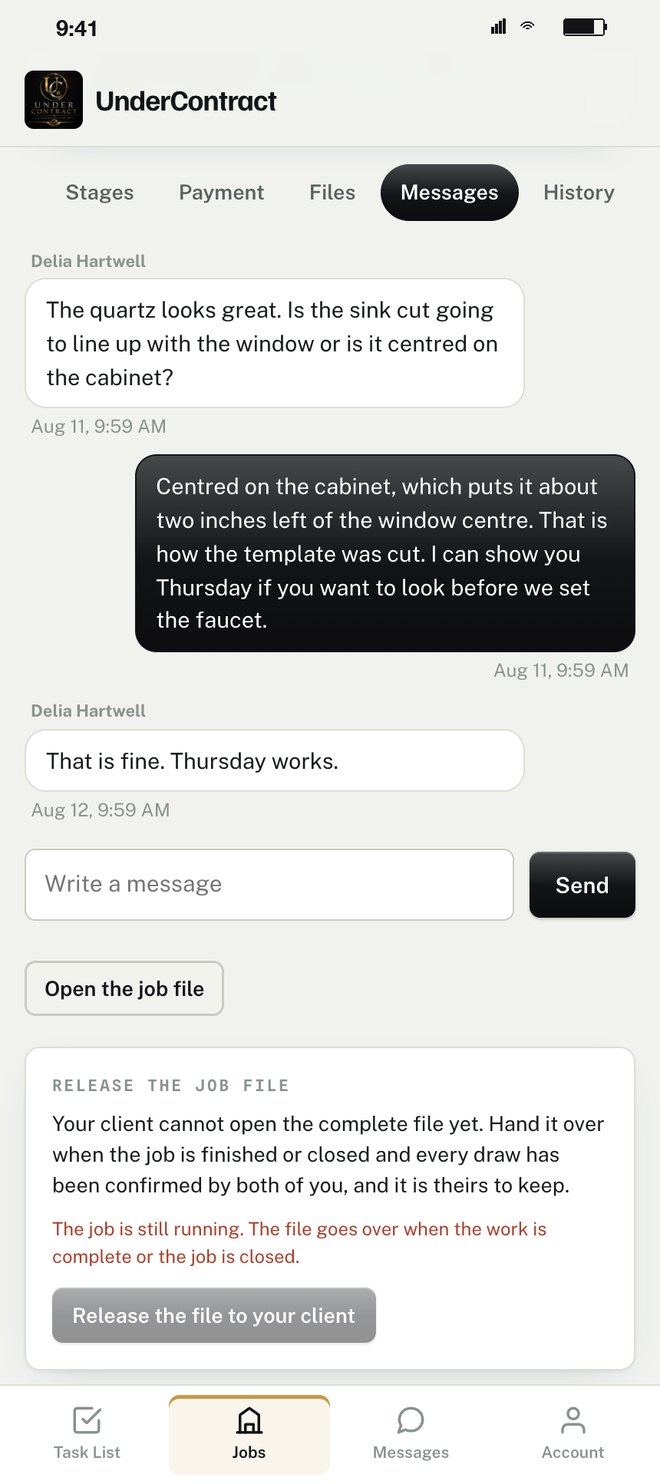
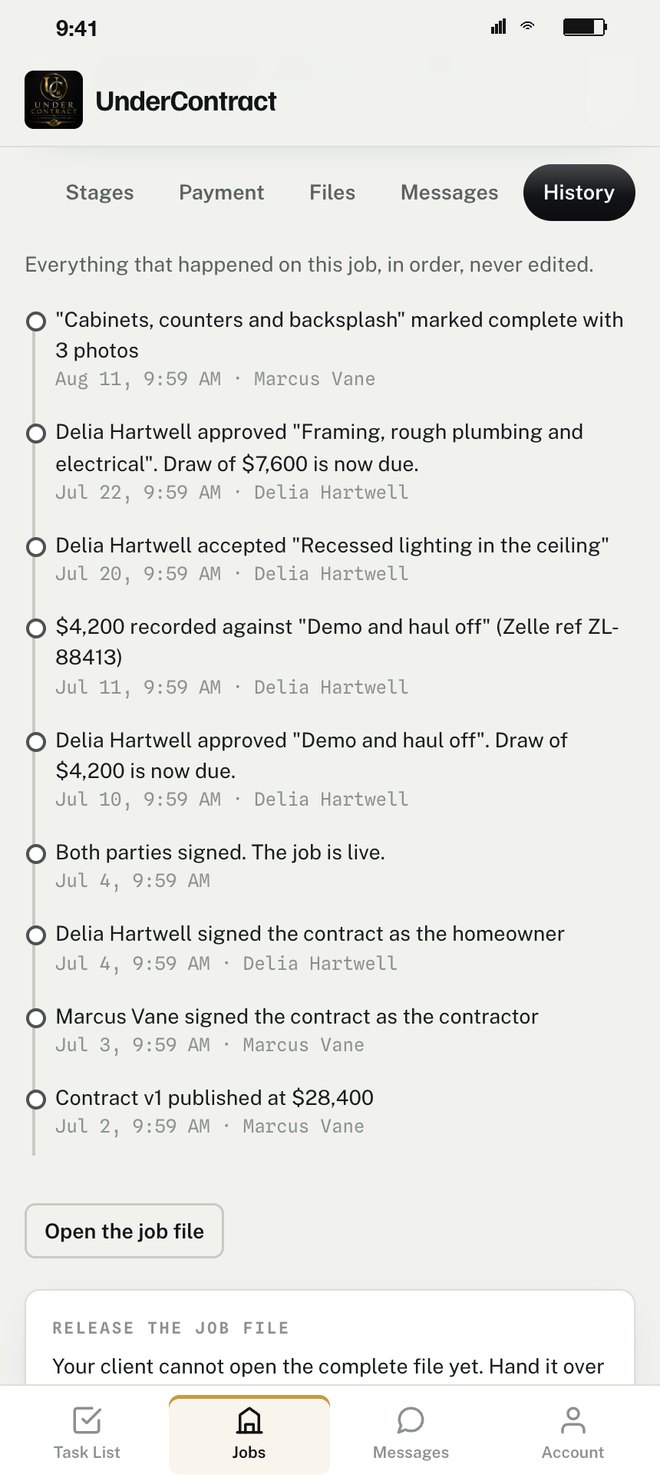
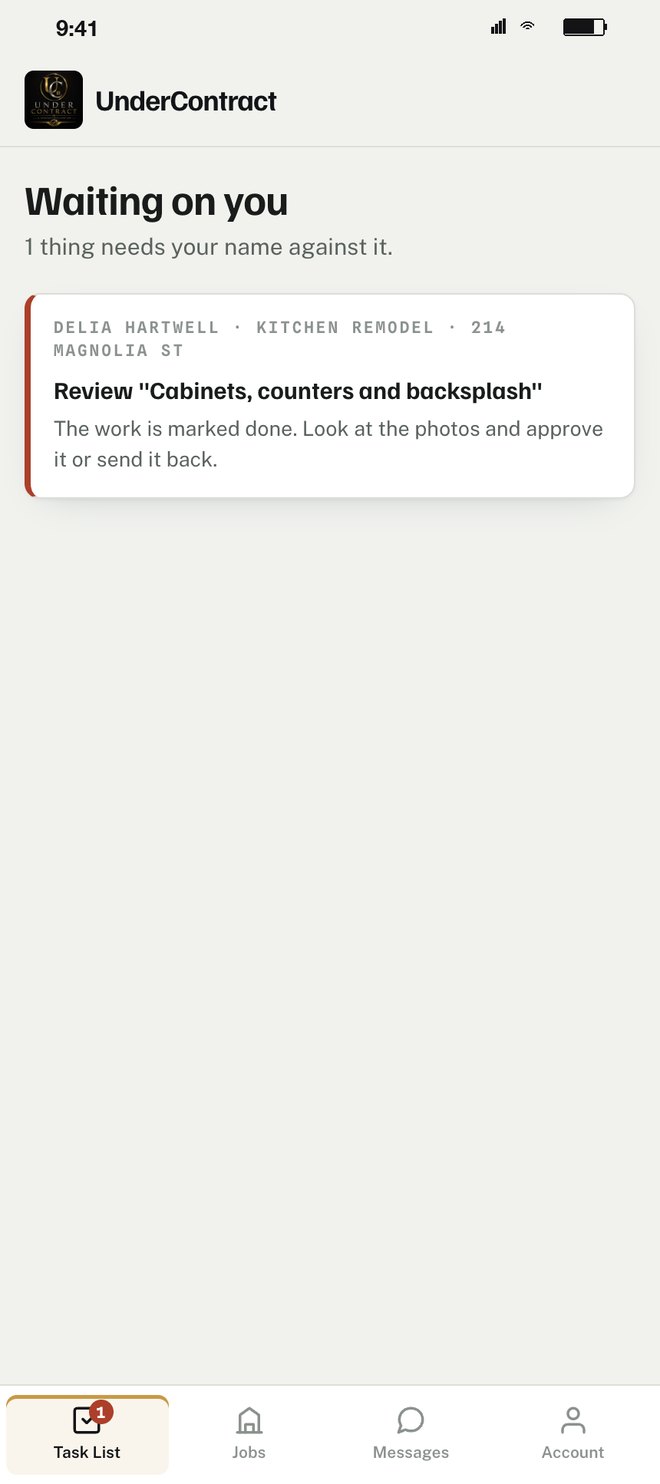
Open it and read the front page. The sample draw schedule on it is the whole idea: a stage is marked done with photos, the homeowner approves it, and only then is the draw due.
Open UnderContract →Brandy works in real estate and applied on a Wednesday at 5:12pm with one line: make home improvement projects safer with transparent contracts, milestone tracking, protected payments and complete documentation for every project. The Dotloop style exchange between the two sides, but for a kitchen instead of a closing.
The hard part was deciding what the app would not do. It does not hold anybody's money. True escrow needs a licensed partner, so the money moves straight between homeowner and contractor, and the app keeps the receipt beside the approval that earned it. That one decision made the whole thing buildable in a day.
Paid Wednesday at 6:25pm. Live Thursday at 10:38am, under a working day later. The reply came in a minute: "Wow. That was fast."
The contractor sets out the scope, the price and the draw schedule. The homeowner reads it and signs first, then the contractor. Neither side starts work until both names are on it.
Photos and notes go against the stage they belong to, dated and attributed. The camera opens on the page, on a phone. What was done stops being a matter of memory.
The homeowner opens the photos and either approves the stage or returns it with a written reason. Nothing is finalized and no draw is due until the person authorized to approve has confirmed.
Paid directly between the two of them, the way they agreed, then recorded. A check needs its number and date, a card its last four, Zelle the account name. Both sides confirm it.
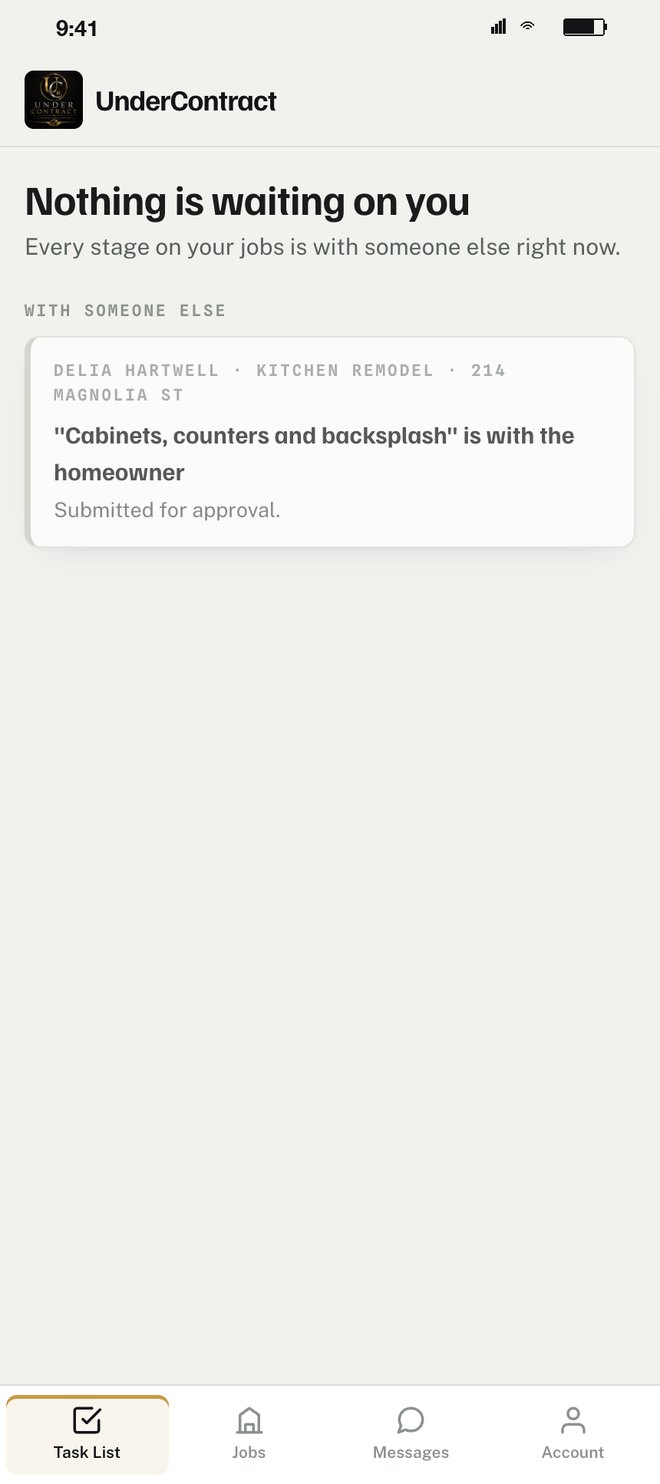
The first look was called Drawbridge, in blueprint navy. Then the owner started using it like an owner. A landing page. A new name, ScopeLock, set from a Brand screen where the name, the colors and the logo change across the whole app at once. The next day a logo arrived that said Under Contract, so the app became UnderContract, in gold, silver and black, lit like metal with a slow shine across the sign in page, and a Flat or Metallic switch to turn it off. Then the lists came, one a day: the job screen showing all five steps and whose move each one is, a contract that cannot be signed until it has been sent, jobs filed under the customer's name, a Task List, forms of payment on the job, Onboarding & contract as its own section ahead of Stages, the client signing before the contractor can, every email opening the exact page it is about, a stage that opens as Deposit due, and Record it refusing to press without a check number. Every list was live the same day or by the next morning.